

India has always been known as the land of stones — a country blessed with an abundance of natural resources, minerals, and beautiful stones that have shaped its architecture, culture, and history. From the majestic Taj Mahal built with Makrana marble to countless palaces and temples adorned with Banswara, Rajnagar, and Udaipur marbles — Indian natural stones have long symbolized grace, durability, and timeless beauty.Let’s dive deeper into why Indian stones are getting extinct, what’s causing the depletion, and how this change is reshaping the future of the stone industry in India.
However, the story today is changing.
The once-thriving Indian marble and stone industry is now facing a silent but severe crisis — natural stone resources are getting exhausted. Major Indian marble belts that once produced some of the finest quality stones are witnessing a sharp decline in production, mine closures, and rapid depletion of reserves.
Let’s dive deeper into why Indian stones are getting extinct, what’s causing the depletion, and how this change is reshaping the future of the stone industry in India.
1. The Legacy of Indian Natural Stones
India’s history with natural stones dates back thousands of years.
The country’s diverse geology gave rise to a wide range of marbles, granites, sandstones, and limestones. Over centuries, these stones became integral to Indian art and architecture.
- Makrana Marble from Rajasthan — used in the Taj Mahal and Victoria Memorial.
- Banswara Marble — famous for its purple veins and subtle shine.
- Rajnagar White — pure, classic, and ideal for interiors.
- Udaipur Green and Pink Marble — rich in pattern and texture.
- Kishangarh Region — the hub of marble trading, known as the “Marble City of India.”
These natural treasures brought India global recognition as a top exporter of natural stones. However, this reputation came at a cost — over-mining and unsustainable extraction.
2. Depletion in Major Indian Marble Belts
Makrana

Makrana in Rajasthan has been one of India’s oldest and richest marble belts. The Makrana White Marble, renowned for its pure white texture and fine crystalline structure, was once considered an eternal stone.
But today, the story is different.
Continuous and aggressive mining for centuries has led to significant depletion. Many of the quarries have reached the end of their natural reserves, and new deposits are not being formed fast enough to replace them.
Since marble takes thousands of years to form naturally, the rate of extraction far exceeds the rate of natural regeneration.
In simple words, what took nature 1000 years to create, we are consuming within a decade.
Banswara

Banswara, famous for its Purple Marble and Ivory White, once supplied premium-quality marble for both domestic and international markets.
However, illegal mining, lack of scientific excavation methods, and overuse of resources have taken a heavy toll. Many mines have either been exhausted or temporarily shut down due to environmental regulations or depletion of reserves.
The loss of natural formations in the Banswara belt has significantly reduced supply, forcing traders and manufacturers to rely on imported marbles.
Rajnagar
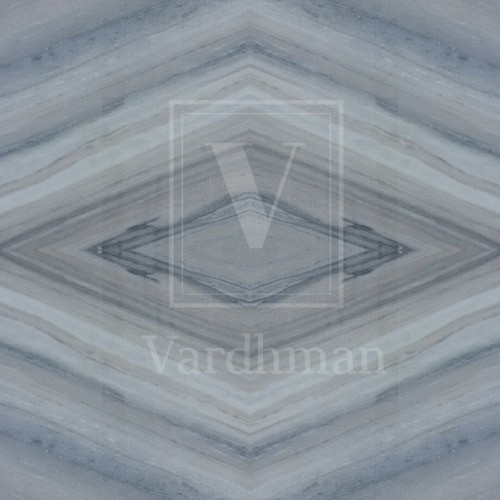
Rajnagar, near Ajmer, is another major marble hub known for Rajnagar White and Rajnagar Plain White Marble.
This region was once home to hundreds of active mines. Today, however, a large number of them have closed, primarily due to depletion and environmental concerns.
As deeper mining layers are reached, the quality of marble often changes, and extraction becomes both costlier and riskier. The natural beauty and consistency that made Rajnagar famous are now much harder to find.
Udaipur

Udaipur, also known as the Marble Capital of India, has long been known for its Green Marble, Pink Marble, and Limestone varieties.
But with rapid urbanization, high demand, and unregulated quarrying, even this region is showing signs of depletion.
Many marble blocks are now extracted from deeper and riskier zones, increasing both production costs and environmental hazards.
Where once Udaipur supplied vast quantities of premium marble, today the focus has shifted to processing and selling imported marbles.
3. Causes Behind the Depletion of Indian Stones
a. Over-Mining and Over-Extraction
The most direct reason for the exhaustion of Indian stones is over-mining.
In the past few decades, the demand for natural stones increased exponentially — both within India and globally. Builders, architects, and homeowners preferred Indian marbles for their beauty and affordability.
This led to excessive quarrying without proper geological planning or rest periods for land recovery. As a result, mineral-rich layers have been stripped away faster than nature can replenish them.
b. Illegal and Unscientific Mining Practices
Illegal mining has long been a problem in the stone industry. Many small-scale operators extract marble and granite without proper licenses or environmental clearances. These unregulated practices harm not only the environment but also the sustainability of natural reserves.
Unscientific mining — such as excessive blasting and improper waste management — has further damaged the structure of marble deposits, making many quarries unsafe and unproductive.
c. Lower Natural Formation Rate
Marble is a metamorphic rock, formed when limestone undergoes heat and pressure over millions of years.
This natural process is extremely slow. The rate at which new marble forms is negligible compared to the rate of current consumption.
In simpler terms — it takes thousands of years to form a single layer of marble, but we are extracting and consuming it all within a few decades.
This imbalance is leading to the gradual extinction of naturally formed Indian marbles.
d. Environmental Restrictions and Mining Closures
In recent years, stricter environmental regulations have led to the closure of several marble mines across Rajasthan and Gujarat. While these steps are necessary for ecological balance, they also contribute to reduced production.
With many traditional mining belts now protected under environmental norms, supply is decreasing even as demand continues to rise.
4. The Shift Toward Imported and Artificial Stones
As Indian marble mines become exhausted or restricted, imported stones and artificial materials are filling the gap.
Today, markets across India are seeing a huge surge in demand for Italian marbles, Turkish stones, and engineered quartz.
Imported Stones Taking the Lead
Countries like Italy, Turkey, Greece, and Spain are now the main suppliers of premium marbles in India.
Names such as Statuario, Botticino, Dyna, Marquina, Travertine, and Carrara have become household names for luxury interiors.
These imported stones offer:
- Consistent quality
- Larger slabs
- Advanced finishing
- Variety of colors and patterns
The depletion of Indian marble reserves has made imported marble the new symbol of luxury and availability.
Artificial Stones – The Modern Alternative
Parallel to imported stones, artificial stones like quartz, composite marble, and porcelain slabs have gained immense popularity.
These are factory-made materials designed to mimic natural marble but with added strength, uniformity, and lower maintenance needs.
Artificial stones are more eco-friendly since they do not involve mining, and they can be produced on demand — reducing dependency on natural resources.
As one industry expert put it,
“Nature took a thousand years to make what we exhausted in ten. Artificial stones are not replacements, but a necessary evolution.”
5. The Economic and Environmental Impact
Economic Consequences
The exhaustion of natural stone reserves has a direct impact on:
- Local miners and workers who depend on quarrying for livelihood.
- Stone processing industries that now have to import raw blocks.
- Buyers and builders, who face rising prices due to scarcity.
As Indian marble becomes rarer, prices are expected to rise sharply in the coming years, turning what was once a common flooring choice into a luxury commodity.
Environmental Impact
Over-mining and quarrying have caused:
- Loss of biodiversity
- Soil erosion and groundwater depletion
- Land degradation
- Dust and noise pollution
Restoring these mining zones requires large-scale reforestation and soil rehabilitation, which often gets overlooked in the rush for profit.
Thus, the environmental cost of marble mining is far greater than the economic benefits it once offered.
6. Within 10 to 15 Years – Real Indian Marble Will Become a Luxury
Experts predict that if the current rate of extraction continues, most of the premium Indian marble varieties will become extremely rare or extinct in the next 10 to 15 years.
Future generations may only see Indian marbles like Makrana White, Banswara Purple, Rajnagar Plain White, and Udaipur Green in heritage buildings and museums.
As natural deposits dry up, the remaining slabs and blocks will become highly valued, turning Indian marble into a luxury product—just like original Burmese teak or natural coral.
7. The Future of the Stone Industry in India
While depletion is inevitable, the industry is not without hope.
There are several steps being taken — and more that can be taken — to ensure a sustainable and balanced future for the Indian stone sector.
a. Promoting Sustainable Mining Practices
Government and private sectors are now encouraging scientific mining methods that minimize waste, reduce blasting, and preserve deposit quality.
Proper quarry planning and controlled extraction can help extend the lifespan of existing mines.
b. Recycling and Reuse of Stone Waste
Stone cutting and processing generate significant waste, which can be reused in the production of reconstituted marble, tiles, and aggregates.
This not only reduces the pressure on natural reserves but also promotes an eco-friendly approach to construction materials.
c. Encouraging Artificial and Engineered Stones
The rise of quartz, composite marble, and sintered stone is a step in the right direction.
These materials offer the same elegance as natural marble but without harming the environment.
Manufacturers can customize color, pattern, and texture — offering infinite design possibilities with reduced ecological impact.
d. Restoration of Closed Mining Areas
Several initiatives are now focusing on reclaiming and restoring old mines, converting them into eco-tourism spots, parks, or water reservoirs.
This helps bring back biodiversity and creates new opportunities for the local community.
e. Promoting Awareness Among Buyers
One of the key steps to sustainability is consumer awareness.
Educating homeowners, architects, and builders about the environmental impact of over-mining can help them make eco-conscious decisions, such as choosing alternatives or using marble judiciously.
8. The Changing Face of Indian Architecture
With natural Indian marbles becoming scarce, the aesthetic of modern Indian architecture is evolving.
Designers are now exploring combinations of imported marble, quartzite, terrazzo, and composite materials to achieve luxury finishes without depending solely on natural stones.
The concept of “sustainable luxury” is gaining importance — where materials are selected not just for their look, but for their longevity and ethical sourcing.
9. Conclusion – A Future to Preserve
The story of Indian stones is both beautiful and alarming.
Beautiful, because it reflects centuries of natural artistry and craftsmanship.
Alarming, because we are witnessing the slow extinction of a natural heritage that took thousands of years to form.
From Makrana to Udaipur, the depletion of marble reserves serves as a reminder that natural resources are not infinite.
As we continue to build modern structures and luxurious interiors, we must remember the cost of every slab we extract from the earth.
The future of the Indian stone industry lies in balance — between progress and preservation, between nature and need.
If we fail to act now, the Indian marble that once built empires and palaces will soon become a luxury artifact of the past, admired only in memories and museums.
Final Thought
“Marble takes a thousand years to form,
and only ten years for us to exhaust it.
Let’s build a world where beauty and responsibility go hand in hand.”