
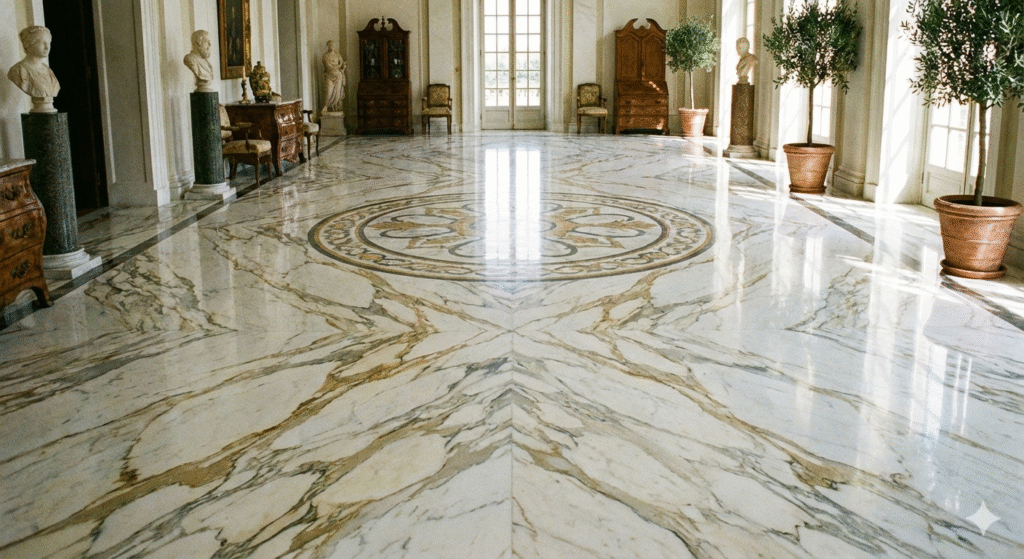
Italian marble flooring represents the pinnacle of luxury home finishes, commanding prices from Rs 150 to Rs 900 per square foot—sometimes even higher. When we look at the most coveted options, the price climbs further, with rare Calacatta marble ranging between Rs 800 and Rs 1,850 per square foot due to its striking veining patterns.
Beyond just flooring material, Italian marble flooring has cemented its prestige throughout history through renowned sculptures and architectural wonders. Indeed, these stones are characterized by exceptional purity, high crystalline structure, and natural luminosity that simply can’t be replicated. While the cost may seem steep, many luxury homeowners are drawn to its luxurious white base, smooth texture, and bold, flowing veins.
In this guide, we’ll explore why wealthy homeowners continue to choose Italian marble flooring despite its premium price tag. We’ll examine its historical significance, aesthetic appeal, and practical considerations to help you decide if this timeless investment is worth it for your home.
The Prestige and History Behind Italian Marble
The allure of Italian marble began thousands of years ago in ancient Rome. Since the dawn of Western civilization, this extraordinary stone has graced everything from temples to tombs, leaving an indelible mark on human history and artistic expression.
Used in iconic architecture and sculpture
Throughout history, Italian marble—particularly from the famed quarries of Carrara—has been the material of choice for monumental structures that have stood the test of time. The ancient Romans first recognized its exceptional qualities, using it extensively in iconic structures like the Pantheon, the Colosseum, and Trajan’s Column. The Temple of Proserpina and numerous Roman forums showcased this luminous stone’s ability to elevate architecture beyond mere construction to the realm of art.
The Renaissance period subsequently elevated Italian marble to unprecedented heights. Masters like Michelangelo and Donatello chose Carrara and Statuario marble for their most significant works. Michelangelo’s David, standing 5.17 meters tall and carved from a single block of Carrara marble, remains perhaps the most celebrated sculpture in human history. His Pietà, housed in St. Peter’s Basilica, further demonstrates how Italian marble enabled artists to achieve the perfect balance between softness and strength.
The legacy of Italian marble extends far beyond Italy’s borders. Notable structures featuring this prestigious stone include:
- The Marble Arch in London, designed by John Nash in 1827
- The Oslo Opera House in Norway, combining traditional and contemporary styles
- Wat Benchamabophit (the Marble Temple) in Thailand, completed in 1911
- Prem Mandir in India, a modern temple constructed entirely from Italian Carrara marble
- The Victoria Memorial in London
What makes Italian marble particularly remarkable is its extraordinary longevity. Structures like Trajan’s Column have endured for more than 1,900 years, demonstrating the material’s exceptional durability alongside its aesthetic appeal.
Symbol of wealth and refinement for centuries
Italian marble essentially became synonymous with luxury long before the term was even coined. From ancient Roman emperors to Renaissance patrons and modern-day elites, those who could afford Italian marble have used it to signal their status and refined taste.
The correlation between this material and prestige is not coincidental but rather stems from its inherent quality and the exceptional craftsmanship associated with its extraction and processing. For centuries, Italians have been considered masters of marble processing, with training courses still conducted in Carrara for those seeking to learn this time-honored craft.
The stone’s connection to wealth runs deep. Its use in palaces, museums, and luxury hotels has firmly established it as a symbol of opulence. This association with luxury continues today, as Italian marble flooring remains the preferred choice for high-end residences, boutiques, and hotels worldwide. Homeowners select it primarily for its purity, elegance, and refinement.
Furthermore, Italian marble’s prestigious reputation has transcended trends and fashions. Unlike many luxury materials that fall in and out of favor, Italian marble has maintained its status as the epitome of sophistication across different eras and cultures. From the ancient world to Renaissance masterpieces to contemporary architecture, this extraordinary stone continues to represent the highest standard of quality and aesthetic excellence.
The cultural significance of Italian marble as a status symbol is so profound that it influences how we perceive spaces today. When we walk into a room with Italian marble flooring, we instantly recognize it as a space of distinction—a legacy built over thousands of years of architectural and artistic history.
Why Italian Marble Appeals to Luxury Homeowners
Luxury homeowners seeking the ultimate flooring solution often gravitate toward Italian marble. Beyond its storied history, several compelling features make this exceptional stone the preferred choice for those who demand nothing but the finest for their residences.
Visual elegance and natural veining
The aesthetic appeal of Italian marble stands unmatched in the world of natural stones. Each slab presents a unique masterpiece created by nature itself, with intricate veining patterns, colors, and textures that elevate any space. Unlike many manufactured alternatives, Italian marble offers an unparalleled combination of soft, elegant veining patterns, consistent color tones, smooth reflective surfaces, and natural translucency that enhances light.
What truly distinguishes Italian marble is its understated luxury. The stone presents a soft sheen and intricate veining against creamy or bright white backgrounds, lending a sense of openness and sophistication to interiors. Moreover, the translucent quality allows light to penetrate slightly beneath the surface, creating a luminous effect impossible to replicate with synthetic materials.
The veining in premium Italian marble results from mineral impurities—clay, silt, sand, and iron oxides—present in the original limestone that redistribute during metamorphism. These create distinctive patterns that range from:
- Linear veining: Straight, parallel lines running consistently across the stone
- Dramatic veining: Bold, sweeping patterns with high color contrast
- Soft veining: Delicate, subtle lines creating understated elegance
- Random veining: Unpredictable, organic patterns resembling natural brush strokes
The strategic selection of these veining patterns dramatically influences a space’s esthetic, transforming ordinary surfaces into artistic expressions.
Association with exclusivity and status
Italian marble has evolved beyond mere building material into a powerful statement of affluence and refined taste. Its consistent presence in palaces, museums, and luxury hotels has cemented its reputation as the ultimate symbol of opulence.
Consequently, incorporating Italian marble flooring immediately elevates a home’s perceived value and prestige. As one marble supplier notes, “Italian marble is a rare marble that is cut and carved by highly skilled cutters and carvers in the stone world today”. This rarity, coupled with its illustrious heritage, makes it particularly attractive to those seeking exclusivity.
For luxury homeowners, Italian marble flooring represents more than beautiful stone—it’s a lifestyle statement. The material has been considered a status symbol for generations, with varieties like Statuario being “one of the most exclusive stones in the world”. This exclusivity appeals strongly to high-net-worth individuals who desire materials that exude opulence.
Imported quality and craftsmanship
The exceptional quality of Italian marble stems from both geological advantages and centuries of specialized expertise. The limestone found in Italian quarries contains minimal impurities, resulting in superior strength and clarity. Additionally, Italian quarries maintain stringent quality control standards throughout the entire process—from selecting and cutting blocks to packaging and shipping.
What truly distinguishes Italian marble, nonetheless, is the precision involved in its processing. Advanced Italian technology ensures uniform thickness, smooth edges, and flawless polishing. This combination of premium raw material and meticulous craftsmanship creates a product that surpasses other natural stones in both appearance and performance.
Notably, Italian marble follows international 20mm thickness standards and adheres to strict processing regulations that ensure consistently superior quality. When homeowners choose authentic Italian marble, they’re investing in generations of expertise and passion—a legacy of artisanal tradition and innovation in cutting, polishing, and finishing techniques that have positioned Italy as a global leader in marble craftsmanship.
The enduring appeal of Italian marble flooring among wealthy homeowners ultimately stems from this unique combination of visual splendor, status symbolism, and uncompromising quality—making it not just a purchase but a powerful statement about one’s values and aesthetic sensibilities.
How Italian Marble Enhances Modern Interiors
The remarkable versatility of Italian marble flooring transforms modern interiors through its natural luminosity and timeless elegance. In contemporary homes, this exquisite material does more than simply cover surfaces—it fundamentally enhances architectural spaces in ways that few other materials can accomplish.
Ideal for open spaces and natural lighting
The inherent reflective quality of Italian marble makes it perfect for amplifying natural light throughout open-concept spaces. Its polished surface bounces light across rooms, creating an airy, expansive feeling that makes areas appear larger than they actually are. Specifically, white Italian marble flooring offers purity and spaciousness while beige variants add warmth and sophistication.
What truly distinguishes Italian marble in well-lit spaces is its subtle translucency. Unlike opaque materials, marble allows light to penetrate slightly beneath the surface, creating a luminous effect that breathes life into modern interiors. This characteristic is especially valuable in homes with floor-to-ceiling windows or skylights, where the stone’s natural veining becomes more pronounced and dynamic as daylight shifts throughout the day.
Pairs well with minimalist and maximalist styles
Italian marble effortlessly complements both ends of the design spectrum. For minimalist aesthetics, neutral marble varieties with subtle veining create clean, uncluttered spaces. Calacatta Oro, with its pristine white background and parallel gray veining, perfectly enhances minimalist rooms featuring earthy tones such as beige, taupe, and soft grays. The large-format slabs create nearly seamless surfaces with uninterrupted veining patterns, contributing to visual calm.
Conversely, maximalist interiors embrace Italian marble’s more dramatic expressions. In 2025 interiors, bold veining patterns and high-contrast combinations dominate luxury design. Picturesque varieties like Diaspora Sicilia, Fire Red, and Golden Portoro Wow serve as stunning focal points when incorporated as book-matched slabs or sculptural accents. These dramatic stones inject organic chaos and warmth that pure minimalism often lacks.
Creates focal points in living areas and bathrooms
In living rooms, Italian marble flooring makes an immediate impression, establishing the tone for the entire home. Large-format marble with subtle veining creates a seamless, sophisticated backdrop for both neutral furniture and vibrant accent pieces. For added visual impact, an Italian marble accent wall becomes a captivating focal point that instantly elevates the room’s aesthetic.
Bathrooms transform into spa-inspired retreats through strategic marble placement. Single-toned varieties like Carrara or Calacatta evoke cleanliness and luxury, especially when extended from floors to shower walls. The material’s natural cooling properties and water resistance make it functionally ideal for these spaces. Homeowners often use marble comprehensively throughout bathrooms—from washbasin tops to bathtub surrounds and vanity back panels—creating cohesive luxury that feels both timeless and contemporary.
Popular Italian Marble Flooring Types Rich Homeowners Prefer
When examining the elite tier of natural stone, certain Italian marble varieties stand out for their exceptional beauty and character. Among the vast selection available, five types consistently capture the attention of affluent homeowners seeking distinctive luxury for their residences.
Statuario: Classic white with bold veining
First and foremost, Statuario marble represents the epitome of Italian luxury, quarried exclusively from the Apuan Mountains in Carrara. Its pristine white background showcases bold, striking gray veins that create dramatic visual impact. The exceptional brightness and remarkable veining patterns make it perfect for statement floors in grand entryways and master bathrooms. Highly sought after yet increasingly rare, Statuario commands premium prices ranging from ₹785 to ₹8120 per square foot. Historically, this exquisite stone was the preferred medium for sculptors, hence its name “Statuario”.
Calacatta: Rare and dramatic patterns
In comparison, Calacatta marble—originally introduced by Michelangelo himself—features a pristine white backdrop with even more dramatic gold and gray veining. The thicker, more expressive veining patterns distinguish it from other white marbles. As the backdrop becomes whiter, the marble grows increasingly valuable. Typically priced between ₹525 and ₹3200 per square foot, Calacatta is frequently showcased in corporate boardrooms and designer homes.
Botticino: Warm tones for cozy luxury
Meanwhile, Botticino marble offers a distinctly different aesthetic with its warm beige or cream tones and subtle veining. Originating from the Brescia province, this versatile stone brings understated elegance to both traditional and contemporary spaces. Priced more accessibly at ₹180 to ₹500 per square foot, it remains ideal for creating inviting atmospheres in living rooms and offices.
Golden Portoro: High contrast black and gold
In essence, Golden Portoro delivers perhaps the most dramatic visual statement with its jet-black background intersected by rich, golden veins. This rare Italian marble creates a royal, timeless appearance perfect for luxury interiors seeking bold elegance. With prices ranging from ₹500 to ₹1000 per square foot, it makes an unforgettable impression in feature walls and statement floors.
Arabescato: Artistic and fluid veining
Above all, Arabescato marble captivates with its distinctive flowing patterns reminiscent of arabesque designs. Quarried from Tuscany’s famed marble regions, it features a luminous white background with swirling, artistic gray veins that create natural artwork. Priced between ₹200 and ₹700 per square foot, this dramatic stone transforms kitchens and bathrooms into showcases of natural beauty.
Is Italian Marble Flooring Worth the Investment?
Deciding whether to invest in Italian marble flooring requires weighing several practical factors beyond just its beauty. Although the initial costs may seem steep, this exceptional material offers compelling long-term benefits.
Longevity and timeless appeal of Italian Marble flooring
With proper care, Italian marble flooring can last between 20 to 100 years, making it a multi-generational investment. While softer than Indian varieties and prone to small hairline cracks over time, Italian marble remains sufficiently durable for lower and middle traffic areas. The material’s classical beauty transcends passing trends—its distinctive veining and luxurious appearance have maintained appeal across centuries, ensuring your floors won’t look dated as interior design fashions change.
Maintenance and care requirements of Italian marble flooring
Admittedly, Italian marble demands consistent attention. The stone requires sealing every 6-12 months to prevent stains from penetrating its naturally porous surface. Professional polishing every 12-18 months restores its signature luster. Daily care involves gentle cleaning with pH-neutral products, immediate attention to spills, and preventative measures like rugs in high-traffic areas. For personalized maintenance advice, feel free to contact us on 977338874 with specific questions about your installation.
Resale value and property appreciation
Perhaps most importantly, homes featuring Italian marble often attract discerning buyers willing to pay premium prices. The material significantly boosts property value, creating an aura of exclusivity that sets your home apart in competitive real estate markets. Luxury properties with Italian marble flooring frequently become marketing highlights when listed for sale, typically attracting quality clients seeking high-end finishes. Ultimately, while requiring higher upfront investment and ongoing maintenance, italian marble delivers exceptional returns through both enjoyment and eventual resale advantage.
Conclusion
Italian marble stands as the ultimate expression of luxury flooring, captivating homeowners for centuries with its timeless elegance and prestige. Throughout this exploration, we’ve seen how this exceptional stone transcends ordinary flooring materials, offering unmatched visual splendor through its distinctive veining patterns and natural luminosity. After all, the rich history behind Italian marble—from ancient Roman monuments to Renaissance masterpieces—has firmly established it as a symbol of refinement that continues to elevate modern interiors.
Certainly, the initial investment might seem substantial when compared to other flooring options. However, the exceptional durability of Italian marble, lasting between 20 to 100 years, makes it a worthwhile long-term investment rather than merely an expense. Additionally, the material’s ability to transform spaces through light reflection, compatibility with various design styles, and unmatched elegance create value beyond mere aesthetics.
Wealthy homeowners specifically choose varieties like Statuario, Calacatta, and Golden Portoro because these stones offer something truly irreplaceable—a perfect fusion of natural art, historical significance, and modern luxury. Although Italian marble requires consistent maintenance with regular sealing and professional polishing, this care preserves its beauty for generations. For personalized guidance on maintaining your Italian marble investment, remember to contact us on 977338874 with any specific questions about your installation.
The resale advantage alone often justifies the initial expenditure, as properties featuring Italian marble typically attract discerning buyers willing to pay premium prices. This extraordinary stone therefore represents more than just flooring—it embodies a lifestyle choice that signals sophistication, appreciation for craftsmanship, and enduring quality. Italian marble flooring thus remains the definitive statement for those who refuse to compromise on excellence and understand that true luxury never goes out of style.
Key Takeaways
Italian marble flooring represents more than luxury—it’s a strategic investment combining timeless beauty, historical prestige, and long-term value appreciation for discerning homeowners.
• Italian marble costs ₹150-₹1,850 per sq ft but lasts 20-100 years, making it a multi-generational investment that significantly boosts property resale value
• Premium varieties like Statuario and Calacatta offer unique natural veining patterns that create artistic focal points while enhancing natural light throughout modern interiors
• Despite requiring regular sealing every 6-12 months and professional polishing annually, Italian marble maintains its status symbol appeal across all design trends
• Properties featuring Italian marble attract premium buyers and command higher prices, often becoming key marketing highlights in luxury real estate markets
The enduring appeal of Italian marble stems from its perfect fusion of natural artistry, centuries-old craftsmanship heritage, and proven ability to transform ordinary spaces into sophisticated showcases of refined taste.
FAQs
Q1. What makes Italian marble flooring so desirable for luxury homes? Italian marble flooring is prized for its unique veining patterns, natural luminosity, and timeless elegance. It enhances modern interiors by reflecting light, creating a sense of spaciousness, and serving as a symbol of prestige and refined taste.
Q2. How long does Italian marble flooring typically last? With proper care and maintenance, Italian marble flooring can last between 20 to 100 years. This longevity makes it a multi-generational investment, offering enduring beauty and value for decades.
Q3. What are some popular types of Italian marble for flooring? Luxury homeowners often prefer varieties such as Statuario (classic white with bold veining), Calacatta (rare with dramatic patterns), Botticino (warm tones), Golden Portoro (high contrast black and gold), and Arabescato (artistic fluid veining).
Q4. How does Italian marble flooring impact property value? Italian marble flooring significantly boosts property value and appeal. Homes featuring this luxurious material often attract discerning buyers willing to pay premium prices, making it a valuable asset in the real estate market.
Q5. What maintenance does Italian marble flooring require? Italian marble requires regular care to maintain its beauty. This includes sealing every 6-12 months, professional polishing every 12-18 months, and daily cleaning with pH-neutral products. Immediate attention to spills and use of protective measures in high-traffic areas are also recommended.