
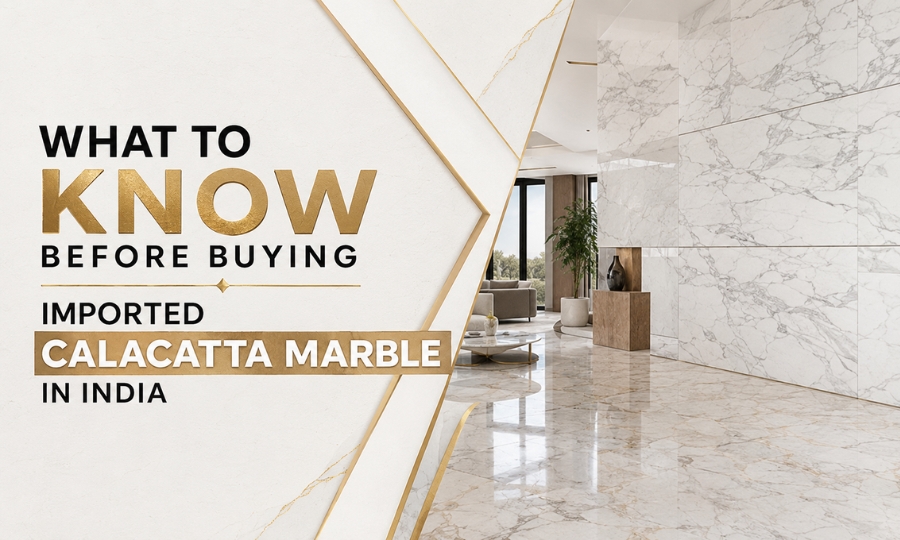
Buying imported Calacatta marble in India requires more than comparing prices, since it involves evaluating authenticity, slab quality, sourcing, installation, and long-term costs. Choosing genuine Italian Calacatta from a trusted importer ensures superior aesthetics, durability, and value for luxury projects.
Key Takeaways
- Verify genuine Italian Calacatta marble origin before purchase.
- Budget for transport, installation, wastage, and GST.
- Inspect slab thickness, veining, and structural reinforcement.
- Buy from direct importers for transparent pricing and traceability.
- Ensure matching block numbers for consistent book-matched installations.
Premium natural stone is now a defining feature of luxury homes, hotels, and commercial spaces across India. Among the most popular options, Calacatta marble stands out for its dramatic grey veining, luminous white background, and timeless appeal. Since authentic Italian Calacatta marble is quarried in limited quantities, understanding its pricing, sourcing, and installation requirements is essential before making a purchase.
Unlike standard marble varieties, Calacatta is valued based on quarry origin, uniformity in slabs, veining patterns, structural integrity, and finishing quality. These factors influence not only the purchase price but also transportation, installation, and long-term maintenance costs.
So, whether you’re an architect, interior designer, builder, or homeowner, here’s what you need to know before purchasing Calacatta marble in India.
What is the Real Cost of Premium Calacatta Marble Per Square Foot in India?
Knowing the complete cost structure helps prevent budget overruns and ensures you’re investing in genuine imported stone rather than lower-grade alternatives.
- The cost of premium Calacatta marble in India varies depending on quarry selection, slab grade, thickness, finish, and import availability.
- Since every block extracted from Italy has unique veining and structural characteristics, no two slabs look exactly alike.
- Marble blocks with bold, continuous patterns and minimal natural fissures command significantly higher prices than commercial-grade selections.
Additionally, exchange rates, freight charges, customs duties, and domestic transportation influence retail prices across different regions. For this reason, Kishangarh’s wholesale market is widely recognised as the national benchmark before finalising procurement budgets.
Calacatta Marble Prices and Associated Costs
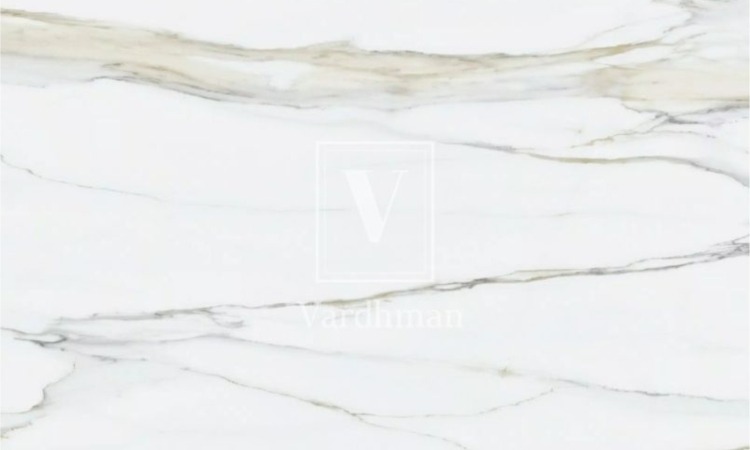
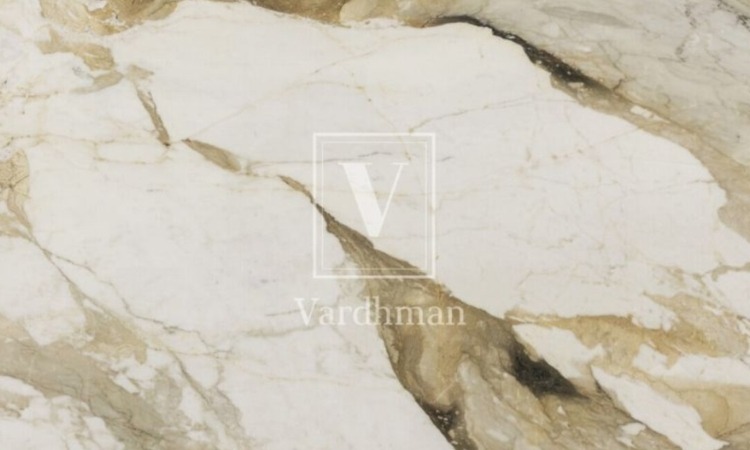
The table below identifies two premium Calacatta marble varieties, price ranges, and their application.
| Marble Variety | Approximate Price (Per Sq. Ft.) | Typical Application |
| Calacatta Gold Marble | ₹1200–₹1,500 | Luxury flooring, feature walls, countertops |
| Calacatta Macchia Vecchia | ₹1,500–₹2,500 | Premium villas, hotels, statement interiors |
Table 1: Calacatta Marble Variety and Price Ranges
Note: Prices may vary depending on slab dimensions, grade, finish, and import availability.
Direct Ex-Factory Kishangarh Pricing Tiers (2026 Index)
Kishangarh, Rajasthan, is India’s largest hub for imported marble distribution. Vardhman Sagar Marbles uses ex-factory pricing from Kishangarh as a baseline, since it reflects the original costs, excluding additional retail showroom markups.
The table highlights the grades, characteristics, and estimated price range.
| Pricing Tier | Typical Characteristics | Estimated Price Range |
| Commercial Grade | Light variation, smaller slabs | ₹950–₹1,500/sq. ft. |
| Premium Grade | Better veining and improved colour consistency | ₹1,500–₹3,000/sq. ft. |
| Luxury Selection | Large book-matched slabs with distinctive veining | ₹3,000–₹6,500+/sq. ft. |
Table 2: Estimated Price Tiers of Different Calacatta Grades
Purchasing directly from us ensures transparency regarding slab origin, block numbers, and quality certification while offering access to a broader inventory.
Hidden Project Costs That Inflate Sourcing Invoices
Buyers often focus solely on the slab price, while overlooking the additional costs that significantly impact the overall project budget.
- Installation materials, transportation, polishing, wastage, handling, and taxes can increase your investment by 20% to 25%, depending on the project’s complexity.
Understanding these costs early helps architects and homeowners prepare more accurate budgets and minimise unexpected expenses (budget overrun issues) during installation.
Interstate Transit Logistics and CGST/SGST Regulations
Transporting imported Calacatta marble from Rajasthan to metropolitan cities in India involves multiple logistical considerations. Here’s what you need to know.
- Freight costs depend on delivery distance, vehicle capacity, unloading requirements, insurance, and site accessibility.
- The GST framework, applied to processed natural stones, is a major factor influencing the overall procurement budget, as well as handling and transportation charges.
Coordinating deliveries with Vardhman Sagar Marbles will help reduce the risk of transit damage and unwanted project delays.
Book-Matching Wastage Calculus for Continuous Flooring Patterns
Book-matched flooring and wall installations require slabs to be cut and arranged in a precise mirrored sequence. While the final appearance is visually striking, ensuring seamless vein continuity requires additional material and support during fabrication.
- If you’re purchasing Italian Calacatta marble or any other Italian marble, make sure you order 15% extra marble (accounting for wastage) for projects involving book-matching, intricate layouts, or large-format installations. But why?
Well, the buffer accommodates cutting losses, edge trimming, future repairs, and natural pattern alignment, ensuring the finished space maintains a consistent and luxurious appearance.
How Can You Differentiate Genuine Italian Calacatta from Synthetic Alternatives?
Natural Calacatta features distinctive grey or gold veining flowing across a bright white background. Every slab is unique because the patterns are created through millions of years of geological activity, making exact replicas impossible.
The growing demand for Calacatta marble has led to a steady increase in engineered surfaces and imported white stones that resemble authentic Calacatta. While some alternatives may look similar at first glance, they differ significantly in composition, durability, and long-term performance. Understanding how to identify genuine Italian Calacatta marble helps buyers make informed purchasing decisions and ensures they receive the quality they are paying for.
Why Calacatta Origins are Limited Strictly to Carrara, Italy
Authentic Italian Calacatta marble is quarried exclusively in the Apuan Alps near Carrara in Tuscany, Italy. The unique geological conditions of this region, developed over millions of years through intense heat and pressure, transformed limestone into the premium marble recognised worldwide today.
- Since quarry reserves are limited and extraction follows strict quality standards, genuine Calacatta remains one of the world’s most exclusive natural stones.
- Buyers should always request documentation confirming the marble’s origin, particularly for premium residential or commercial projects.
The Mineralogical Breakdown: Calcite vs. High-Iron Substitutes
The exceptional beauty of authentic Calacatta marble is due to its high calcite content, creating a bright white appearance and refined crystalline structure. The mineral composition also enhances the marble’s ability to carry a polished finish, reflecting light and creating a stunning ambience.
In contrast, some lower-grade imported stones often contain higher concentrations of iron-bearing minerals or other impurities, which create inconsistencies in appearance and change the colour of the background over time. While these materials may resemble Calacatta, they often lack the same visual depth and natural elegance of genuine Italian Calacatta marble.
The table below differentiates genuine Italian Calacatta from synthetic options.
| Feature | Genuine Calacatta Marble | Synthetic Alternatives |
| Origin | Quarried only in the Apuan Alps, Italy. | Factory-made (quartz, porcelain). |
| Veining | Unique, deep grey/gold thick veins. | Repetitive, printed surface patterns. |
| Texture | Naturally cool, soft, scratches easily. | Uniformly hard, highly scratch-resistant. |
| Depth | Translucent; light penetrates the surface. | Opaque; flat, shallow appearance. |
Table 3: Differences between Genuine Calacatta Marble and Synthetic Alternatives
Critical Physical Specifications to Verify in the Warehouse Yard
Inspecting Calacatta marble in person is undoubtedly one of the most effective ways to assess its quality before you purchase. A thorough warehouse inspection allows buyers to verify structural integrity, slab dimensions, surface finish, and consistency across multiple slabs.
Run the following diagnostics of physical characteristics to reduce installation issues and ensure the selected slabs meet project specifications.
Measure the True Structural Rim
Do not rely on the supplier’s inventory sheet. Take a calibrated digital vernier calliper and test the slab thickness across four distinct corners. Authentic Italian luxury lots must maintain a uniform thickness between 18mm and 20mm to safely survive cutting and diamond polishing.
Execute the 30-Degree Flashlight Test
Turn on a high-intensity flashlight and cast the beam across the polished face of the slab at a sharp 30-degree angle. Look for cloudy patches, localised dullness, or uneven reflections. Genuine vacuum-infused macrocyclic epoxy resin will look perfectly glass-like, whereas cheap topical fillers will show up as rough, fractured seams.
Audit the Consecutive Block Numbers
Inspect the factory stamps on the unpolished sides of the slabs. For book-matched layouts, confirm that the block registration numbers are consecutive (e.g., Block 101, Slab 14, 15, 16). Any break in the sequence will affect the veining patterns, which will mismatch across your floor space.
Why Slab Thickness Predicts Lifetime Stone Performance
Slab thickness plays an important role in the durability and structural stability of natural stone.
- Thicker marble slabs generally provide greater resistance to handling stresses during transportation, fabrication, and installation, especially for flooring, staircases, and kitchen countertops.
- Although the appropriate marble thickness depends on the intended application, buyers should ensure consistent dimensions for uniform installation and finishing.
The 18mm vs. 15mm Structural Load Threshold
The thickness of premium imported marble slabs ranges from approx. 18 mm to 20 mm for flooring and high-traffic applications. Compared with thinner slabs, these offer improved strength during fabrication and reduce the risk of damage during handling.
When evaluating slabs in the warehouse, use a calibrated digital vernier calliper to verify consistency of thickness across multiple locations rather than relying solely on supplier specifications.
Deconstructing Reinforcement Protocols: Epoxy Resins vs. Topical Fillers
Natural Calacatta marble may contain microscopic fissures that are stabilised during factory processing. Understanding the reinforcement method used in this regard helps buyers distinguish professional manufacturing practices from cosmetic surface repairs.
High-quality reinforcement improves structural stability without affecting the marble’s natural appearance.
How Macrocyclic Epoxy Resins Interact with Crystalline Pores
Vardhman Sagar Marbles uses transparent vacuum-applied epoxy resins to strengthen fissures within marble slabs.
- Under controlled processing conditions, the resin penetrates fine pores and bonds with the stone, enhancing stability while preserving the slab’s polished finish.
- It maintains the marble’s visual clarity and supports long-term performance without altering its natural character.
Sourcing Logistics: Why Buying Directly from Importers Safeguards Your Investment
Vardhman Sagar Marbles maintains detailed records of quarry origin, block identification, and processing history, enabling buyers to make more informed decisions and check the authenticity, quality, and traceability of Italian Calacatta marble.
Eliminating Retail Middlemen Markups Along Major Metro Highways
Retail showrooms in metropolitan areas typically incur higher operating costs, including premium commercial rents, warehousing, and logistics. These expenses often influence the final selling price of imported marble.
By sourcing directly from Vardhman Sagar Marbles, buyers get access to a wider selection, improved transparency, and better value while comparing slabs from the same shipment.
Securing Lot Continuity and Consecutive Block Sequence Numbers
Large flooring projects, feature walls, and book-matched installations require visual consistency across every slab.
- Before confirming your purchase, verify that the slabs originate from the same production lot.
- Matching block numbers helps maintain uniform veining, background colour, and overall aesthetic continuity, resulting in a cohesive luxury interior.
In Conclusion…
Investing in authentic Calacatta marble is a long-term decision that combines elegance with lasting performance. By understanding pricing, verifying authenticity, inspecting slab quality, and sourcing directly from trusted importers, homeowners, architects, and builders can confidently create timeless interiors while avoiding costly mistakes and ensuring exceptional project outcomes.
Looking for Premium Calacatta marble for Your Next Project?
With an extensive inventory, expert guidance, and transparent sourcing, our team can help you choose the ideal slabs to ensure luxury and authenticity in your property. Visit our Kishangarh showroom or contact us to check the latest stock availability and get personalised assistance from our marble specialists.
Frequently Asked Questions
Q1: Can Vinegar or Lemon Juice Cause Permanent Structural Damage to an Unsealed Calacatta Floor?
Yes. Vinegar and lemon juice are acidic and can react with the calcium carbonate in unsealed Calacatta marble, causing etching that permanently damages the surface. Though it does not affect the structural integrity, repeated acid exposure can enlarge surface pores, making the marble more vulnerable to staining, moisture penetration, and long-term wear. Prompt cleaning and periodic sealing help protect the stone and ensure aesthetics and longevity.
Q2: What Causes an Installed Italian Marble Slab to Exhibit Hairline Cracks Along the Vein Lines Months After Laying?
Hairline cracks often develop because the natural veins in Italian marble are weaker than the surrounding stone. Subfloor movement, inadequate bedding, improper expansion joints, or thermal expansion can create stress on these veins over time. In some cases, insufficient resin reinforcement during processing or poor installation practices can also contribute to delayed cracking.
Q3: Is It Possible to Use Standard White Cement for Laying Calacatta Marble Flooring?
Using only standard white cement is generally not recommended for installing Calacatta marble flooring. It may not provide the flexibility, bonding strength, or moisture control required for premium natural stone. A high-quality white marble adhesive or polymer-modified mortar is a better choice, as it reduces the risk of staining, debonding, and moisture-related discolouration.
Q4: Why Do Some Calacatta Slabs Require a Longer Drying Time After Wet-polishing on Site?
Some Calacatta slabs have higher porosity or more open-vein structures, allowing them to absorb additional water during wet polishing. Moisture can also become trapped beneath resin-filled veins or within thicker slabs. Adequate drying time ensures uniform colour, prevents temporary dark patches, and enables sealers to bond properly for long-lasting protection.