
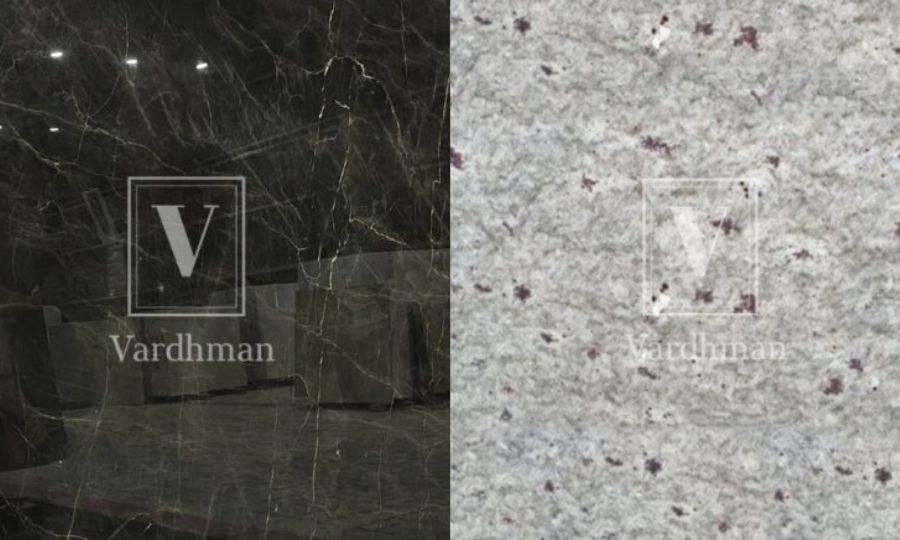
While moon white granite is highly resistant to chips and scratches and withstands high heat, Armani marble is prone to etching and scratches and is damaged by extreme heat. Moreover, in contrast to moon white granite, which is suitable for high-traffic and outdoor areas, Armani marble is a convenient choice for low-traffic and indoor areas.
Key Takeaways
- Moon Granite appears in milky white and soft ivory backgrounds, requires regular sealing to ensure the aesthetics and to stand against heat and scratches.
- Armani marble is available in rich aesthetic variants, such as Armani Black Italian Marble, Armani Grey Italian Marble, and Bronze Armani Italian Marble, with moderate durability.
- Armani marble (highly porous) and the granite stone (less porous) both need sealings for consistent performance against staining.
- Armani Marble is used in luxury flooring, decorative accents, wall cladding, and fireplace surrounds.
- Moon White Granite is used in heavy-duty flooring, kitchen countertops, and exterior cladding.
Armani Marble and Moon White Granite’s popularity in Indian houses is primarily due to the balanced luxury and durability. While light-colored, durable Moon White Granite is widely used in modern Indian kitchens, Armani marble has become a staple choice in luxury, contemporary flooring, accent pieces, and bathroom walls.
Here, we explore the major differences between these two stones in terms of their utility, durability, and aesthetics.
What is Moon White Granite?
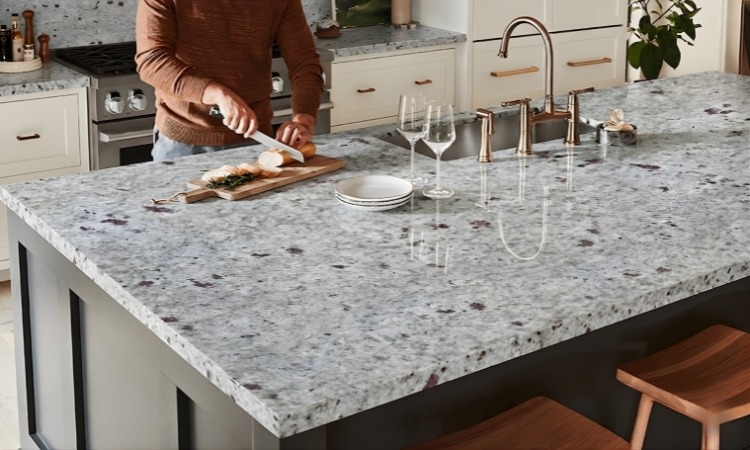
Moon White Granite is one of the popular natural stones, quarried in Andhra Pradesh and parts of Odisha. The luminous appearance of this granite often resembles the aesthetics of a moonlit sky. Contact Vardhman Sagars and get various sizes (16 MM, 18 MM, or 30 MM) for kitchen top, floorings, or staircases, at ₹170 – ₹180 – moon white granite price per sqft.
Key Characteristics
Here are the key characteristics of Moon White Granite.
Appearance and Color Palette
This premium granite is predominantly available in soft ivory or bright milky white background. However, the surface offers the aesthetics of fine-grained silver-grey swirls, along with delicate, deep navy blue or black speckles. Best option for large projects due to low level of variation, and the burgundy garnets or dark wine-colored garnets help this to stand out.
Note: Moon White Granite differs from Kashmir White, as the latter shows cooler and red/taupe specks. However, in cases of River White and Colonial White, the differences are observed with burgundy veins & lighter base, and rose/brown warmer specks, respectively.
Physical Properties
Composed of quartz, feldspar, and mica, this stone is widely known for high-scale durability – Mohs scale 6-7. However, like other granites, it requires regular sealing (since it is porous) to protect the aesthetics and strength against heat, scratches, wear, and tear. Simple cleaning with pH-balanced soap and a soft cloth is sufficient for it.
Versatility in Design and Affordability
Due to its high frost-resistance, moon white granite can withstand extreme climate conditions. Because of this, it is useful for both indoor (bathroom walls and floors) and outdoor use (swimming pool). Moreover, the grey and white pair exceptionally well with dark or white-colored cabinetry. Available at mid-range prices, but this stone comes with elegance and luxury.
Performance in Indian Houses
Check the table below to know the different application areas of Moon White Granite in India, and the benefits.
| Application Area | Suitability & Use of Moon White Granite | Key Benefits |
| Window Frames | Used for both interior and exterior frames | Water and moisture-resistant; prevents rotting or warping. |
| Wall Cladding | Popular for interior accent walls and exterior facades. | Durable and weather-resistant; low porosity protects against staining. |
| Swimming Pool Areas | Ideal for pool surrounds, capping, and fountains. | Naturally resistant to harsh outdoor conditions and moisture; provides a luxury finish. |
| Bathroom Walls & Floors | Highly recommended for shower surrounds, vanity tops, and flooring. | Easy to clean, as it is resistant to stains and moisture if properly sealed. |
Table 1: Application of Moon White Granite in Indian Houses
Note: Since Moon White Granite is iron-low, it may oxidize and turn yellow. But using non-yellowing sealant can keep the marble bright.
What is Armani Marble?
Armani marble – a premium variety of natural stone – is categorized as a premium choice with sophisticated aesthetics. It is primarily quarried in Iran and Turkey, and evokes a sense of timeless, high-end luxury in Indian houses. It is widely used in commercial and residential projects for countertops, flooring, and wall cladding.
Key Characteristics of Armani Marble
Here are the key characteristics of Armani marble.
Rich Aesthetic Variants
Armani marble – whether it’s Armani Black or Armani Grey – is often found in several distinct color palettes, making it a unique choice in Indian houses. Widely known for its deep grey backgrounds and delicate silver or white linear veining, this marble offers a bold, minimalist look.
Here are 3 of its top variants and armani marble price per sqft in India.
- Armani Black Italian Marble (₹220 – ₹300 / Square Feet): Rich black background – known for the delicate, interwoven golden and white veining. A popular choice, since it offers a dramatic opulence in Indian houses, along with uniqueness.
- Bronze Armani Italian Marble (₹250 – ₹300 / Square Feet): Available in glossy and smooth finishes, elevating the aesthetics of interiors. The dense composition makes its tear and wear resistance – a good choice for high-traffic areas.
- Armani Grey Italian Marble (₹250 – ₹300 / Square Feet): Available in a blend of intricate veining and soft grey shades, creating a timeless look. Resistant to heat and scratches – a premium choice for interiors.
Note: High-end Armani Marble is almost always treated with Italian Epoxy. Mentioning that Vardhman Sagar uses Italian Resin Treatment to treat high-end Armani marble.
Durability and Hardness
Mostly ranked around 3-4 on the Mohs scale, Armani marble is a moderately hard stone. It is resistant to moderate heat and scratches. However, if used in high-traffic zones (e.g., lift area), it demands additional care.
Note: High-quality Armani variants have a low water absorption rate, ensuring their resistance to staining and moisture (with proper sealing).
Uniformity
While some highly erratic marbles do not offer unique patterns, Armani grey marble in India is popular for its consistent color and unique patterns. This is the key reason behind the popularity of this marble in large-scale seamless installations. Compared to Grey William marble, Armani grey (especially) offers a more uniform aesthetic, while the former is known for prominent veining and dramatic appearance. Contact Vardhman Sagar Marbles to get the best-quality Armani marble for premium interiors.
Note: Use Lappato or honed finish marble for better grip without compromising the luxury look, and avoid it in shower areas due to the high porosity.
Performance in Indian Houses
Check the table below to know different application areas of Armani marbles in India, key design functions, and features.
| Application Area | Key Design Function | Key Features in Indian Homes |
| Living Room Flooring | Creates a luxurious, modern look. | Durable, high shine, matches well with warm lighting. |
| Feature/Accent Wall | Serves as a focal point. | Adds texture and depth, often used behind TV units. |
| Fireplace Surround | Modern, moody atmosphere. | Heat-resistant. |
| Bar/Table Tops | Elegant furniture accent. | Natural veining adds character. |
Table 2: Application of Armani Marbles in Indian Houses
Note: Armani marble is a popular and convenient choice in Indian pooja rooms and mandirs due to modern luxury aesthetics, high durability, and practical maintenance.
Comparison between Armani Marble and Moon White Granite
Check the table below to know the differences between Moon White Granite and Armani Marble.
| Feature | Armani Marble | Moon White Granite |
| Stone Type | Metamorphic (Marble) | Igneous (Granite) |
| Primary Appearance | Rich brown, grey, or black base with delicate light-coloured veining. | Milky white or ivory base with grey speckles and black/silver swirls. |
| Hardness | Prone to scratches and etching. | Highly resistant to scratches and chips |
| Durability | Moderate; best for indoor, low-traffic areas. | Excellent; suitable outdoor and high-traffic areas. |
| Heat Resistance | Moderate: Can be damaged by extreme heat. | High: Withstands hot pots and pans. |
| Pore Structure | Highly porous and requires regular sealing. | Less porous, but requires sealing to prevent liquid absorption. |
| Primary Uses | Luxury flooring, decorative accents, wall cladding, and fireplace surrounds. | Kitchen countertops, heavy-duty flooring, bathroom vanities, and exterior cladding. |
Table 3: Differences between Moon White Granite and Armani Marble
Note: The durability of kitchen countertops in Indian houses depends on the chemical composition. Check the table below to know the reactions of these two stones against some kitchen essentials.
| Ingredient | Moon White Granite Reaction | Armani Marble Reaction |
| Turmeric | The yellow pigment often seeps into microscopic fissures if the stone is unsealed. | Since Armani marble is more porous, turmeric leaves spots, which are very difficult to wipe. |
| Tamarind & Citrus | Although granite resists mild acids, tamarind or lemon can wear out the protective seal. | Acid immediately reacts with the calcium carbonate in marble. |
| Mustard Oil | Compared to marble, it is less absorbent, and oil generally affects the surface and can be cleaned with pH-neutral soap. | Oil penetrates deep into marble pores, which creates greasy, dark spots. |
Table 4: Moon White Granite and Armani Marble Reactions to Different Cooking Ingredients
Get the Best-Quality Granite Armani Marble from Vardhman Sagar
Looking for convenient Moon White Granite and Armani Marble? Visit Vardhman Sagar Marbles’ Website for the best options with exceptional performance and visual aesthetics.
Frequently Asked Questions (FAQs)
Q1: What Type of Moon White Granite Should I Opt for?
Opt for high-gloss polished finish moon white granite, since it highlights the patterns for kitchen countertops. The consistent speckle patterns, along with subtle black and grey speckles in the bright white base, offer high stain and heat resistance. You can also opt for matte finish, if you’re looking for a rustic, modern, and non-reflective feel.
Q2: Is Moon White Granite a Good Choice for Indian Kitchens?
Yes, Moon White Granite is an excellent choice for Indian kitchens, especially due to its heat resistance and tolerance to direct heat contact – such as pans and hot pots, without damage. The light color palette also enhances kitchen spaces, while the long-lasting performance is due to the natural strength. Make sure you use a trivet to preserve the sealant layer.
Q3: What Should I Use to Clean Armani Marble in Indian Houses?
You can use a mixture of warm water and mild dish soap, or any pH-neutral stone cleaner. Use microfiber cloths or a soft mop to clean the marble surface without scratching. To prevent staining from oil or tea spills, use high-quality sealant every 6 months. Remember, do not use any acidic products (vinegar, citrus-based cleaners) or harsh chemicals like bleaching agents to remove tough stains.
Q4: Which One Should I Opt for in High-Humid Regions of India – Moon White Granite or Armani Marble?
In high-humidity Indian regions like Mumbai, Kolkata, and Chennai, Moon White Granite is a better choice than Armani marble primarily due to low porosity. Since this granite stone is dense with lower porosity, it prevents water seepage and bacterial growth in these areas. Moreover, with high stain resistance and etching, this granite is a better choice in tropical, kitchen areas to combat oil or turmeric stains. Apart from this, the granite can also survive the North Indian heatwaves, and can certainly be a great choice in Rajasthan or Delhi regions.
Q5: How do Armani Marble and Granite Moon Stones Feel Different Following the Barefoot Comfort Score?
While the granite feels colder due to its high density, the marble feels warmer due to its softer and less dense nature. Apart from this, the granite surface feels hard and smooth, but the marble offers a velvety and soft underfoot feeling. However, the marble may feel slippery if wet, while the granite is slip-resistant with professional finishes.