

Premium marble choices, such as Botticino, Calacatta, and Bronze Armanic, are known for creating remarkable aesthetics, mirror-finish polish, depth, and long-term architectural value for Indian homes. A professional installation with precision subfloor techniques ensures the best design in your house.
Key Takeaways
- Italian marble offers distinctive flooring patterns through continuous vein layouts, book-matching, geometric cuts, inlays, and single-border trims.
- Book-matched layouts offer mirror-like, symmetrical vein patterns that work well in master suites and foyers.
- Proper installation involves suitable adhesive support, subfloor preparation, and narrow-joint grouting to support a seamless and stable marble floor.
- Single-border trims define the aesthetics of open-plan homes, creating geometric contrast between the central and border marble field.
According to a report by IMARC, the Indian luxury interior design market was valued at $1.7 billion in 2025, and by 2034, it is expected to hit $3.0 billion at a CAGR of 6.23%. Experts identify rapid urbanization, preference for premium materials, and customized high-end living as the key factors behind the growth.
On the other hand, the ornamental stone market in India recorded $5.54 billion in 2026, and by 2031, it will reach $7.62 billion. The advanced expertise and evolving preferences for flooring designs and patterns in luxury villas or mansions in high-end urban residences across Mumbai, Kolkata, Delhi-NCR, and Bengaluru significantly drive the market.
Here, we explore the best Italian marble flooring designs and patterns for luxury Indian houses.
Top 5 Italian Marble Flooring Layout Patterns
Here we discuss 5 Italian marble flooring layout patterns you should know before planning any renovation.
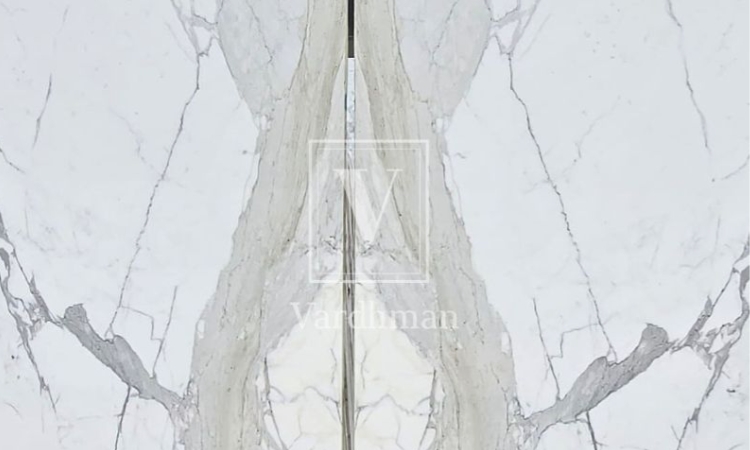
1. Book-Matched (Butterfly Pattern)
Book-matching involves installing consecutive slabs from the same marble block. The natural veining mirrors and creates an artistic focal point.
How It Works
So, instead of laying the consecutive pieces in the same direction, experts put one piece face-up while the adjacent piece is flipped over at a horizontal position.
However, since the pieces are mirror images, the grain lines, veins, or colors flow outward from the center joint, developing a symmetrical or butterfly pattern.

Best Suited For
This Italian marble design is ideal for double-height foyers, formal living rooms, and master suites. Statuario White and Calacatta Gold marble can be the best option, as they yield high-contrast, crisp, and mirror vein patterns.
2. Seamless Continuous Vein (Straight Lay)
A continuous directional vein flow is created across the room with an end-to-end marble alignment. Remember, during dry-laying, the stone must be selected carefully to ensure seamless matches.
How It Works
- Sliced and Polished: Italian marble slabs are sequentially sliced. Experts polish the same face of every single slab to ensure veining continuity.
- Installation: Installation teams opt for a Dry Lay process, through which the physical slabs are laid out on the site.
- Seamless Line Flow: Technicians organize and adjust the slabs using a cutting list, and they mark the orientation corners with non-penetrating markers to ensure a seamless line flow throughout the layout.
Best Suited For
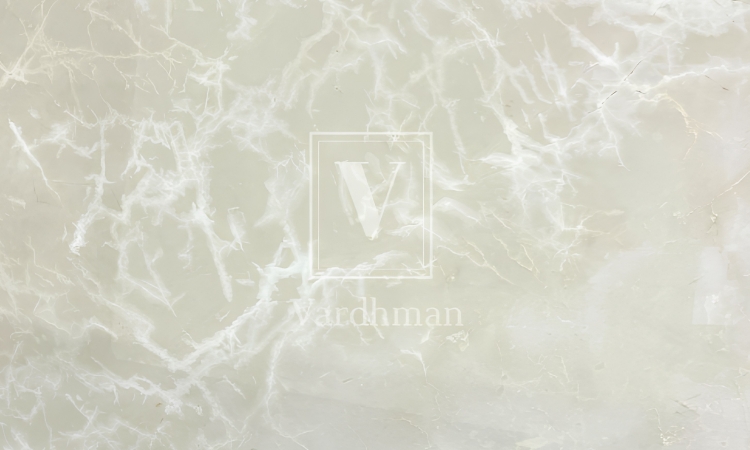
This is ideal for grand hallways and dining rooms. However, choosing an Italian marbled design with horizontal fluid veins, such as Crema Nova or Aqua Grey, can enhance the visual impact of a room and its boundaries.
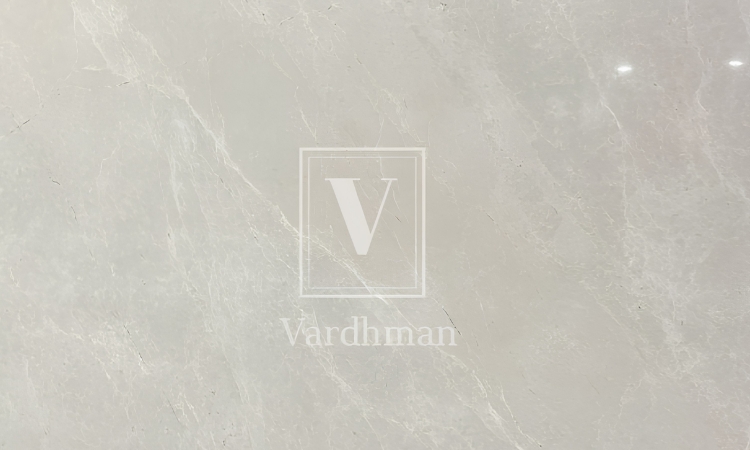
Tip: Sourcing marble directly from a verified supplier secures slab-to-slab color and vein consistency. Find the best quality Italian marble in Kishangarh by visiting stone yards, where you can hand-pick your preferred slabs.
3. Metallic Brass and Mother-of-Pearl Inlays
Professionals use waterjet machines for marble slab grooving and insert solid brass strips, mother-of-pearl accents, or copper lines. It offers a blended aesthetic of modern Italian marble layout with traditional Indian artisanal craftsmanship.
How It Works
Experts identify precise floral, geometric, or abstract patterns. They map the marbles directly onto the Italian marble slab. They use CNC routers or specialized hand-grinding tools. They carve shallow grooves into a dense marble surface, following the layout.
Embedding MOP or Brass Strips
Mother-of-pearl (MOP) or metallic strips are hand-fitted. Specialized strong adhesives are used to press these into the carved grooves.
Levelling and Polishing
The marble surface is mirror-polished to ensure that the shell and brass fit with the stone and create a reflective and seamless finish.
Best Suited For
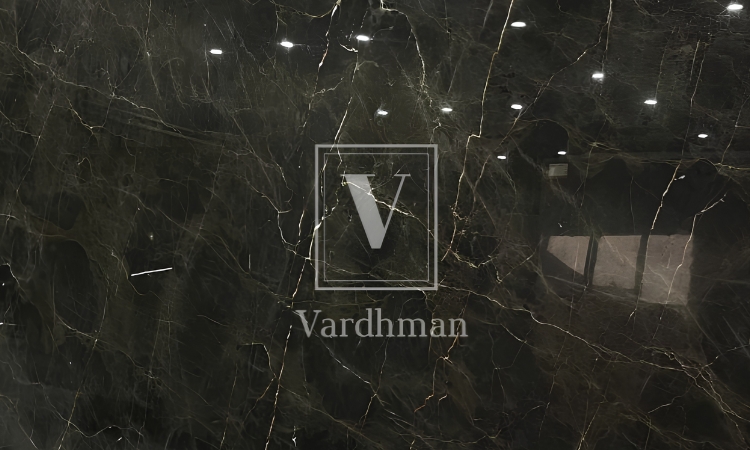
This is best suited for puja room entryways, vestibules, and central drawing rooms. Using brushed inlays with Black Gold or Spanish Grey Italian marble establishes a refined and sophisticated contrast against lighter walls.

4. Chevron and Diamond Cut Pattern
Professionals cut marble slabs into geometric shapes and sizes, creating a diagonal grid and dynamic zigzag patterns, which add texture and movement to the floor.
How It Works
Italian marble slabs are precisely cut (typically at 45-60 degrees). This ensures a sharp and continuous point. However, when arranged in continuous V-shaped zigzags and parallel lines, they point in a single direction, creating a formal, clean, and symmetrical look.
Best Suited For
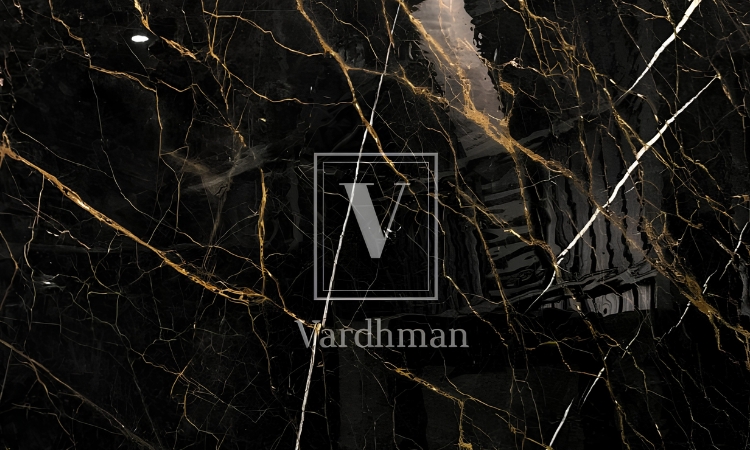
Best for home bars, walk-in closets, and private study areas. Use contrasting tones, such as Golden Galaxy Italian marble with Solo Grey, to create a geometric Italian marble flooring design.
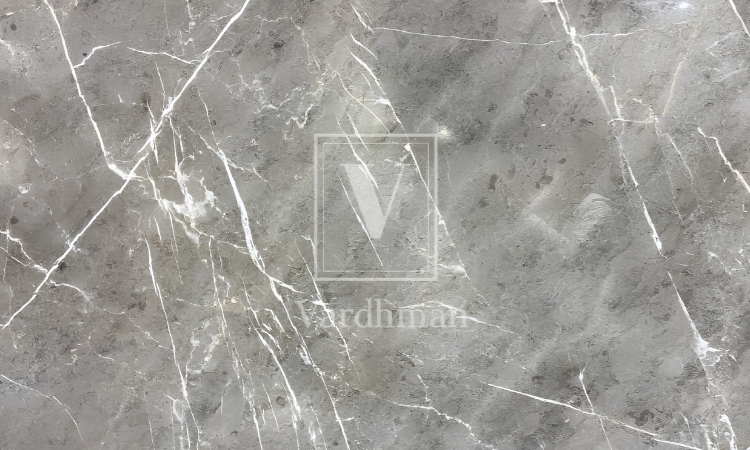
5. Contemporary Single Border Trims
Though it used to be multi-layered, modern layouts often opt for slender 3- to 6-inch dark marble borders.
How It Works
Where it’s between a living area and dining, or the kitchen space and drawing space, a single border helps create boundaries in open-plan architectural layouts. For example, you should choose Nero Marquina as a single border trim against Angelo White marble to highlight the central layout and create a visual edge.

With a single border trim, you can hide raw joints and ensure smooth floor-to-wall transitions.

Best Suited For
This is an ideal choice for master bedrooms, living areas, and formal dining rooms.

Tip: Lay an expansive base of Dyna or Botticino Classico marble and use a dark border to accentuate the room’s proportions, without affecting the interior decor or overwhelming it.

Planning for an expansive bungalow project or villa renovation? Get the best Italian marble in Kishangarh yards, ensuring edge-to-edge structural integrity and color.
Which Italian Marble Suits the Best in Your Home?
Opting for the best Italian marble depends on traffic levels, room lighting, and function.
Light-colored options, such as Calacatta, Statuario, and Carrara, are best choices for north-facing spaces and living rooms.
Beige varieties, such as Crema Nova and Malisha Beige marble, offer soft, golden undertones.
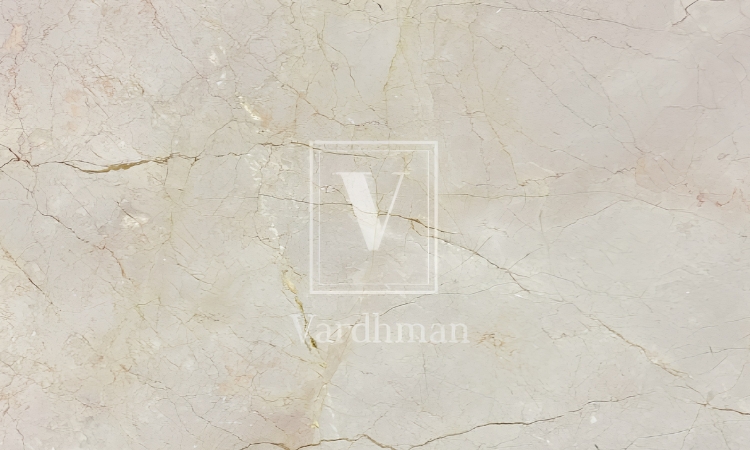
Deep grey and dark Italian marble, such as Newton Grey and Bronze Armani, create dramatic focal points in vanity areas.

Precision Installation Rules for Indian Houses
Professional grouting and subfloor levelling are essential for the effective installation of Italian marble in Indian houses. Here’s what you need to know.
Grout Standard
For the best-quality Italian marble design, install the marble with narrow joints. Grouting is essential to ensure clean joints, maintain a seamless appearance, and protect against moisture.
You can modify two-component epoxy grouts (ISO 13007 R2 standards) with UV-resistant pigments.
Subfloor Levelling
16- 20 mm-thick Italian marble slabs are soft in nature, compared to quartz or granite.
Preparing a proper subfloor is essential to secure a stable surface. You can opt for a full-coverage latex-modified adhesive bed.
Conclusion
Whether metal inlays, a bold book-matched arrangement, or subtle continuous veining, select the right layout pattern and get to experience high-end luxury at Indian houses. Professional installation, precision, grouting, and accurate layout ensure a long-lasting finish and shine, enhancing property aesthetics and market values.
Elevate Your House with the Finest Italian Marble!
Renovating your residence next month? Explore our top-tier Italian marble collection, curated for luxury residences. Visit our showroom at Kishangarh and get the best installation support in the future as well.
Frequently Asked Questions
Q1: How Much Do I Need From a Single Lot for a Book-Matched Layout?
Order 15-20% additional material from a single quarry lot, after calculating the total floor. The buffer accommodates vein alignment, corner trimming, and natural stone variation across consecutive slabs.
Q2: Can I Install Brass or Metal Inlay Strips Into Italian Marble Flooring Without Cracking the Stone?
Yes, of course! Experts install metal strips with waterjet cutting and flexible epoxy structural adhesives. You should ensure a suitable movement joint between adjacent metal elements and marble to accommodate thermal movement and reduce the risk of unwanted cracks at the interface.
Q3: What Is the Ideal Joint Width Between Large Italian Marble Slabs?
For large-format Italian marble flooring design, experts use a micro-joint width of 1-1.5 mm. They prioritize color-matched liquid resin to fill the fine joints, as it ensures an uninterrupted surface appearance without compromising structural movement.
Q4: What Material Wastage Should I Consider for Complex Diamond or Chevron Patterns?
You can consider a wastage budget of 18-22% for complex geometric patterns like chevron or diamond patterns, due to edge trimming and diagonal cuts. So, get slabs from the same lot, as it ensures color uniformity, essential for a symmetric property design and aesthetics.
Q5: Which One Is Better for Long Villa Hallways – Running Directional Veins or Border-Framed Layouts?
Running directional veins are suitable in narrow hallways, since they create a focal point. On the other hand, border-framed layouts are ideal for villa corridors, establishing architectural zones along the wide pathway.