
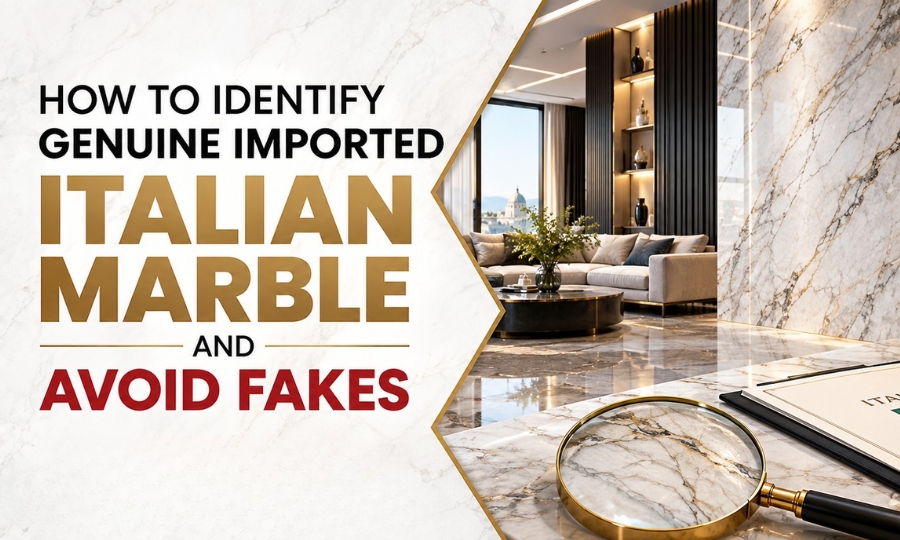
You can assess the authenticity of Italian marble through visual inspections, documentation, physical measurements, and slab traceability. Don’t forget to verify the origin based on documents. Inspect reinforcement and treatment, and compare sequentially cut slabs before purchasing.
Key Takeaways
- Examine crystalline appearance, mesh backing, and veining before finalizing any marble.
- Measure slab thickness and check consistency in appearance.
- Ask for COO and relevant documents to cross-check available batch, block, and shipping details.
- Review sequentially numbered slabs under consistent lighting to assess veining continuity and color.
So, what’s the current state of the Indian marble market? A Mordor Intelligence report identified the Indian construction ornamental stone market as $5.54 billion, a steady increase from $5.20 billion in 2025. It is also found that the market will grow at 6.58% and reach $7.62 billion by 2031.
Another Mordor Intelligence report recorded the luxury residential real estate market size at $64.21 billion in 2026 ($57.87 billion in 2025) and expected it to reach $107.99 billion at a CAGR of 10.95%. Following the increasing demand, Italian marble emerged as a premium choice due to its timeless aesthetics, opulence, and unique vein patterns.
But how can you identify top-quality imported Italian marble? How can you differentiate between fake and authentic Italian marble? Here are our guidelines.
Common Scams & Red Flags in Stone Yards
Since artificial Italian marble is often sold as PVC/UV or engineered stone, be aware of some red flags and scams that you may face at stone yards.
Colored Epoxy
Unethical marble suppliers often apply superficial wax polish and colored resins to low-grade limestone or other varieties. As a result, it may increase the surface gloss and fill fissures, but when installed, they degrade rapidly under UV exposure and maintenance routines.
Mislabeling Marble
Scammers deliberately mislabel slabs about their origin.
They often rename regional stones, such as Turkish beige limestone or Indian dolomite, as Italian beige marble varieties like Sofita Beige or Imperial Beige Italian marble. So, when selecting an Italian marble slab, check the edges closely. If it shows heavy, dark resin drips, it is chemically treated under high pressure and not a commendable choice.
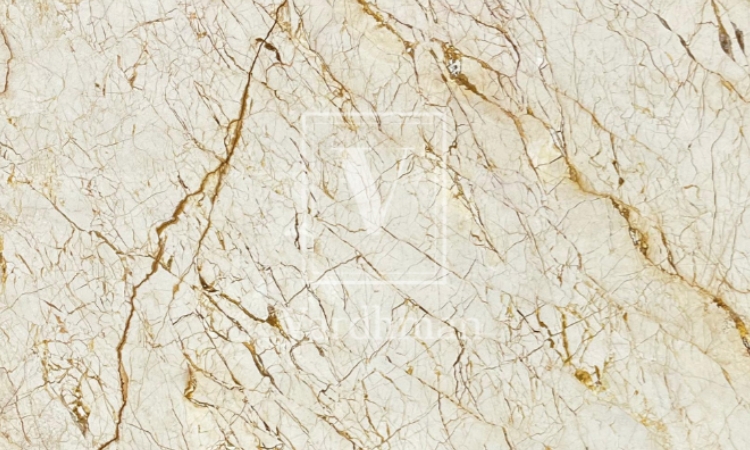
Remember, authentic Italian gang-saw slabs are cut to uniform dimensions (approx. 9X5 feet to 10X7 feet), and they are available with precise edge finishing. Get the best-quality, authentic Italian marble varieties at Vardhman Sagar’s yard, where you can test and check the treatment levels, processing, and origin. You can hand-pick your preferred marble variety as per your project requirements.
Practical Field Inspection Protocol
So, what do you need to check? What should you know before you inspect Italian marble slabs?
Here’s what you need to know.
Translucency & Crystalline Depth Inspection
Authentic Italian marble forms through metamorphic recrystallization. Under intense pressure and heat, it produces an interlocking crystalline structure, composed of calcite. The mineral structure is the key factor behind its visual depth and translucency.

So, when inspecting Dover White or Angelo White Italian marble slabs, use a high-intensity LED flashlight against the surface at a 45-degree angle. But how would it help you?
Well, natural metamorphic marble often exhibits translucency as light scatters on the crystalline surface. However, due to factors like crystal structure, mineral composition, and thickness of marble, the translucency varies. On the other hand, synthetic imitations or other counterfeit products block light penetration, resulting in surface-level flat reflection.

Acetone and Acid Solvent Spot Test
Scammers often use chemicals to modify Italian marble in Kishangarh yards, masking natural flaws and altering stone color. So, how can you identify it? How can you avoid counterfeit products?
Apply a few drops of technical-grade nail polish remover or pure acetone to a microfiber cloth and rub it for 30-40 seconds on an Italian marble slab. Don’t go for the slab if the stone surface looks dull or the cloth catches color easily, as either it is wax-coated or topically dyed.
Tip: Do not conduct any acid test on finished slabs, but check sample pieces, since it shows the best results for differentiating between synthetic resin composites and genuine mineral composition. Get experts’ opinion at Vardhman Sagar Marbles, a reputed Italian marble dealer in Kishangarh, ensuring pure mechanical polishing with grit diamond abrasives, instead of chemical wax treatments.
Backside Fiber-Mesh & Epoxy Audit
Imported marble slabs often feature a fiberglass mesh backing attached with epoxy resin that ensures structural integrity during international transport. So, before you opt for a marble slab, audit the purpose and density of the backing to avoid fake products.
Check the slab under bright light. While a single layer of transparent, fine mesh shows standard protective backing, multiple thick layers of opaque mesh and heavy, grey epoxy indicate high porosity or structural damage. Moreover, check whether the structural fissures (on the back) are lined with veins.
Ultrasonic Thickness Caliper Measurement
Inconsistent slab thickness leads to poor load distribution and cracks during installation. In contrast to this, gang-saw processed marble shows accuracy and uniformity across stone blocks.
So, before deciding on marble variety or Italian marble size for your residential or commercial area project, measure slab thickness at 8 points with a calibrated digital ultrasonic caliper or precision Vernier gauge.
And here’s what you need to know.
Standard high-grade Italian marble slabs are 16mm, 18mm, or 20mm thick. The dimensional tolerances highly depend on processing, product specifications, and applications. So, buyers must confirm the thickness and variation before purchase. Inspect multiple points on slabs and verify measurements.
Documentation & Verification Checklist
Here’s what you need to check and verify to find authentic Italian marble slabs and avoid counterfeit products.
Certificate of Origin
Ask for the official Certificate of Origin (COO) to verify Italian origin and avoid counterfeit products. Issued by the relevant Italian Chamber of Commerce, the COO specifies origin (such as Apuan Alps, Carrara, and Brescia) and the quarry location, stone block identification numbers, and Bill of Lading (B/L) numbers.
Tip: You should also ask for traceability details, such as quarry information and supporting documents if available.
Batch Uniformity Variation
Italian marble blocks are cut into multiple slabs in sequence. Each slab is individually numbered or labelled to identify the position within the original marble block. But how does it help?
Well, it helps buyers and suppliers track the cutting order, select compatible pieces for large flooring areas or book-matched installations, and compare background tones and natural veining.
Here’s what you need to check to ensure batch uniformity for the best outcomes.
Make sure the slabs are traceable to the same block, and that they have a consistent veining flow.
Inspect the background tone under consistent lighting to check colors and shading.
Match block references, since it ensures visual consistency. But remember, they don’t guarantee identical appearance or uniform properties across every slab.
Why is Vardhman Sagar Marbles the Most Trusted Supplier of Italian Marble?
Vardhman Sagar Marbles is the most trusted supplier of Italian marble, since it is a direct importer of top-tier Italian marble, which further eliminates issues regarding intermediary markups. Apart from this, we also guarantee transparent supply-chain traceability, which increases commercial credibility and stakeholder engagement.

Whether it’s for Black Marquina or Armani Beige, Vardhman Sagar Marbles guarantees systematic quality control, rigorous structural testing, and high-grit mechanical diamond polishing. The extensive stockyard allows inspection of full-sized gang-saw slabs under natural lighting, ensuring full transparency in structural integrity, veining, and coloration.
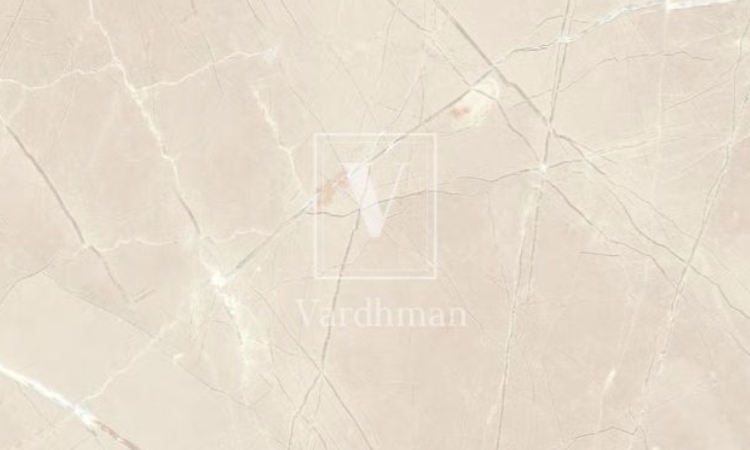
Our transparency and regular customer support are the USP of our success. As a top Italian marble company in Kishangarh, we are not only known for a wide variety of Italian marble slabs, but our experts can guide you from purchasing marble to its installation and maintenance.
Conclusion
Identifying top-quality Italian marble requires thorough inspection of mesh, crystalline translucency, and chemical integrity, as well as official documentation regarding authenticity and origin. Make sure that you pick your preferred slabs after testing their agility and originality of color and quality. Don’t forget to ask for a certificate of origin and check traceability details to find premium marble varieties for your projects.
Planning for Renovations or a New Construction Project? Here’s Your Trusted Partner.
Contact Vardhman Sagar Marbles to hand-pick your preferred marble at our Kishangarh yard. You can also explore our Italian marble collection. Get the best type for your next project, along with our guidance.
Frequently Asked Questions
Q1: Are Slabs With Fiberglass Net Backing Most Likely Weak or Cracked?
No, not necessarily. A fiberglass net backing does not mean that the stone is cracked or weak. It is often used to reinforce full-sized marble slabs during the international stone trade, against stress.
Q2: How Can I Check Whether the Veining Pattern Is Color-Enhanced or Artificially Dyed?
You can rub a sample or an unpolished edge with a white cloth with pure acetone to test for artificial dyes on the slab surface. Now, if the cloth gets the surface color or the veins look dull, it is topically dyed or color-enhanced.
Q3: Are Resin-Filled Small Pinholes on the Slab Surface Normal, or Are They of Poor Quality?
Some microscopic surface pinholes are natural characteristics of metamorphic stones, formed during geological recrystallization. High-grade factory processing fills these pinholes with epoxy resin (UV-stable).
Q4: How May I Know Whether a Slab Has a Temporary Wax Coat or Holds a Natural Polish?
A natural polish, guided by diamond abrasive pads, creates a durable, mirror-like reflection. Most importantly, it does not rub off with solvents. However, temporary wax coatings often feel sticky and come with smear marks if wiped with a microfiber cloth. It also dissolves quickly in contact with acetone.
Q5: Can I Conduct Chemical Spot Tests in Your Stockyard?
Surely, you can. However, we don’t allow strong acid tests on finished display surfaces, but you can conduct acetone solvent tests on unpolished slab edges or samples. We can guide you through technical verification and provide samples from a specific bundle for chemical testing.