
The price variance of Italian marble is mostly observed due to several factors, including origin, aesthetic purity, structural dimensions, and logistical costs. Additionally, processing charges and international taxes increase the price of Italian marble in the Indian market.
Key Takeaways
- Rarity, aesthetic purity, and slab dimensions decide the Italian marble prices in India.
- Importing duties, GST (for raw marble blocks 5% and for finished marble slabs, 18%), and currency fluctuations highly impact the marble price.
- Epoxy reinforcement and vacuum processing ensure structural durability and prevent discoloration, ensuring long-term luxury, value, and timeless elegance.
Italian marble is highly popular in India and is used as a premier luxury material, valued at 4.02 billion USD in 2024. The popularity is driven by rapid urbanization and the exclusive, timeless appeal, enhancing the overall aesthetics of the property.
Italian marble, renowned for its white base, deep veining, and high gloss, is considered a status symbol, although the price varies in different market conditions. The rarity of this marble, customized demands, logistics, taxes, and processing are the key reasons behind the flexible prices in India.
Here, we explore how these factors affect the Italian marble prices in the Indian market.
1. Marble Type and Rarity
The specific quarry origin and availability often decide the Italian marble price in India. Rarer stones with limited supply are mostly available at premium pricing.
Ultra-Premium Varieties
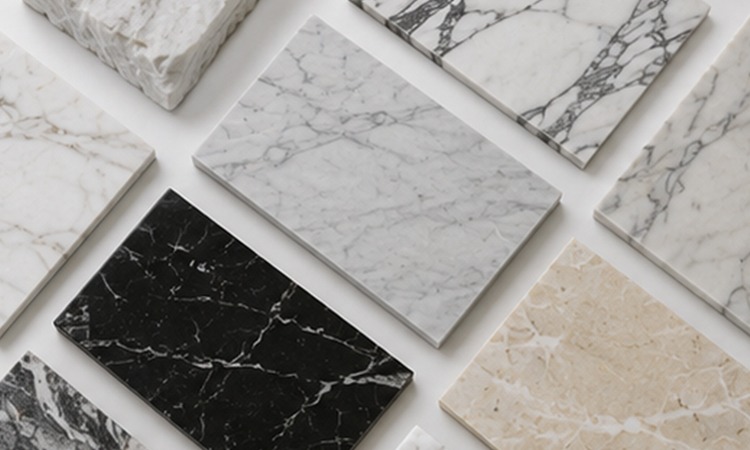
Stones like Statuario Marble and Calacatta Gold Marble are identified with features like stark white backgrounds with distinct, dramatic gold or grey veining. They are sourced from exclusive quarries with low yields, and available at ₹1,000 – ₹4,000+ per sq. ft.
Classic Varieties
Carrara Marble features a more abundant supply, and the aesthetics are defined with light grey veining. It serves as a more accessible marble item to experience the Italian luxury, hovering around ₹300 – ₹800 per sq. ft.
Commercial/Standard Varieties
Beige and grey stones such as Botticino Marble and Perlato are highly abundant in nature and cost-effective. Available at ₹200 – ₹500 per sq. ft.
2. Slab Grading and Visual Characteristics
Based on structural purity and aesthetic uniformity, suppliers often sort natural stone into specific quality grades. But how does it affect the pricing? What are the key factors behind the flexible price? Let’s find out.
Background Purity
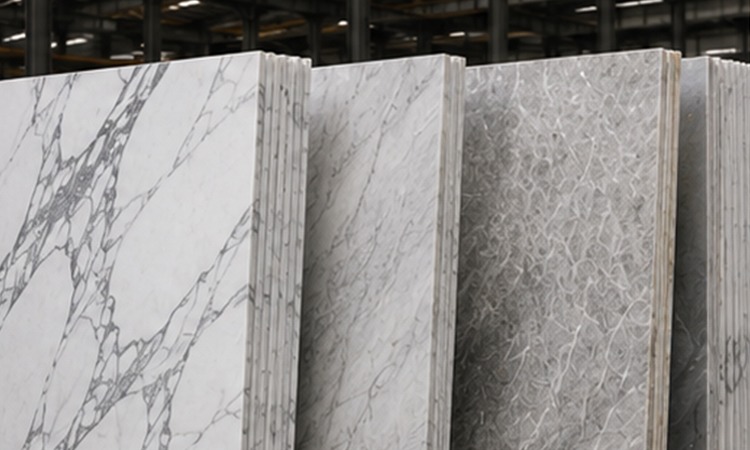
Pure, milky white backdrops without dark patches or mineral spots often fetch higher price points, due to premium aesthetics.
Vein Consistency
Italian marble with rhythmic, balanced veining, supporting book-matching (aligning two slabs to create mirror images, in high demand in modern Indian houses) costs extra due to the exclusive, visually appealing offers.
Structural Defects
Slabs graded as AAA (Super Premium) feature fissures and minimal natural cracks, due to which they require less epoxy resin filling during processing. These slabs come with aesthetic purity and structural integrity, enhancing both the market value and landed cost, compared to low-grade alternatives.
3. Dimensions and Thickness
Physical properties like thickness and dimensions influence the Italian marble price in India, along with material volume and structural integrity.
Thickness
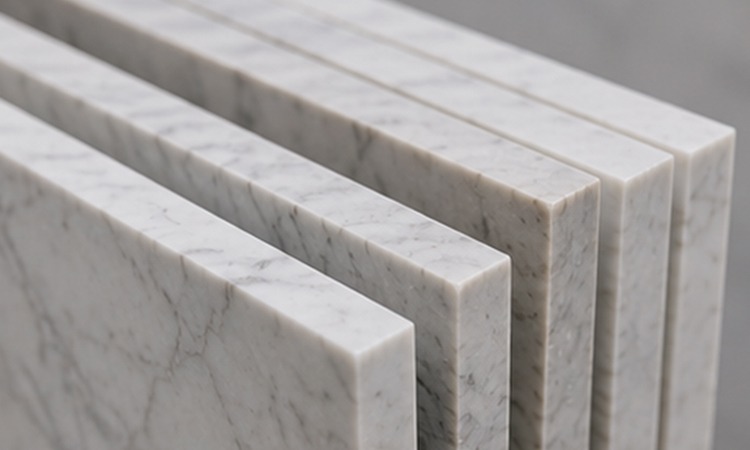
The standard slab thickness for imported Italian marble in India is 16 mm to 20 mm. So, thicker marble options, such as 25 mm or 30 mm, demand a higher price, with customized options.
Slab Size
Large, unbroken slabs are the popular choices due to the seamless flooring layouts with fewer joints. Smaller blocks are cheaper compared to a large slab, but yield more grout seams.
4. Surface Finishes
The added custom laboratory processing cost due to texture-altering from the factory-standard state influenced the Italian imported marble in India. Here’s how the finishes impact the marble price.
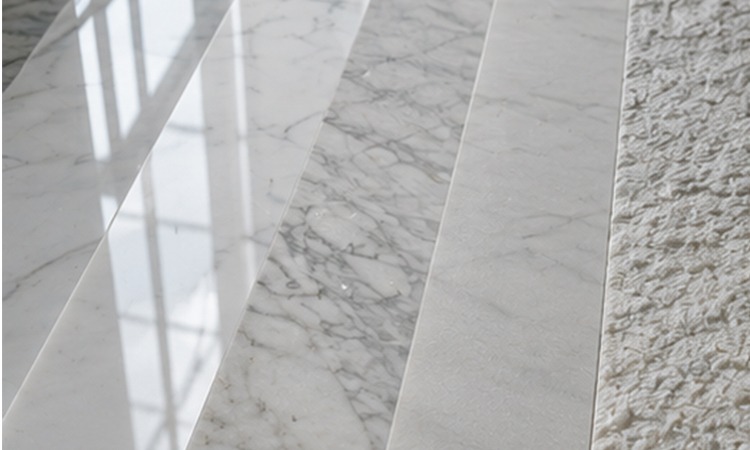
Polished Finish (Highest Cost)
The most popular finish for Italian marble, the polished finish, offers a mirror-like shine. It needs additional processing, abrasive polishing, and labor, adding to the expense.
Honed/Matte Finish
A smooth, satin, or matte finish, less reflective in nature, is often preferred to hide scratches in high-traffic areas.
Leathered/Brushed Finish
A textured surface finish is popular due to its ability to hide stains and water spots well. It may be priced differently based on the complexity of the brushing process.
5. Import Duties, Logistics, and Taxes
Since Italian marble is imported into India from European quarries, the macroeconomic variables impact the marble price significantly. Here are the key factors:
Customs & Ocean Freight
Ocean container transport, customs import duties, and port handling add fixed charges, influencing the stone’s market value in India.
Currency Exchange Fluctuations
Slabs are purchased globally in USD or EUR. Volatility in the Indian Rupee (INR) exchange rate alters landed supplier pricing.
Goods and Services Tax (GST)
In India, raw marble blocks cost a 5% GST, while fully finished marble slabs attract an 18% GST.
Inland Transport
Kishangarh, Rajasthan, is the premier hub handling 1500 marble and granite processing units. Substantial transit, packaging, and crane loading fees are added while transporting fragile slabs from Kishangarh to major metro areas, like Delhi, Mumbai, or Bengaluru.
6. The Quality of Processing and Resin Treatment
Italian marble is naturally a fragile stone with tiny pores and microscopic fissures. So, it goes through a careful reinforcement process to become useful for house or commercial flooring. Here are the factors related to the reinforcement processes that impact the Italian imported marble price in India.
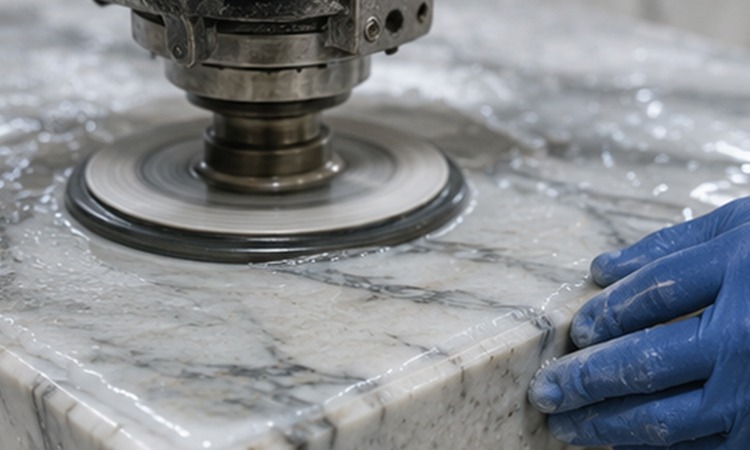
Epoxy Resin
High-quality Italian marble slabs are treated with premium epoxy resins, which are often imported from Italy or Germany, and a fiber-net backing. It enhances the durability and structural integrity of marble, especially for high-end, fragile Italian marble. It strengthens the composite structure when applied to the back of the stone.
Vacuum Processing
It enhances the quality of marble by extracting air from the pores and veins, ensuring specialized resin and strengthening the marble from the inside out. It reduces chances of breakage during cutting, minimizes staining, and increases structural integrity with a durable, high-gloss finish.
Both these processes are two value-adding steps, enhancing the price of Italian imported marble in India. Remember, cheap or non-verified Italian marble often uses low-grade polyester resins, which turn the marble slab yellow over time. Premium Italian marble costs more, but it prevents unwanted discoloration and cracks, ensuring a long-term performance.
Wrapping Up
With a clear and concise knowledge of these variables, property owners can take informed investment decisions, following project requirements. Italian marble pricing is exclusively not based on the origin of the stone, reflecting a blend of logistical complexities, aesthetics, rarity, and reinforcement techniques. However, while the premium varieties of marble are available at a moderate to high price range, they offer timeless elegance and durability, empowering property luxury with a long-lasting, sophisticated finish.
Contact Vardhman Sagar Marbles for Top-Quality Italian Marble at Affordable Prices.
Looking for top-rated imported Italian marble at affordable prices? Contact us or Visit Vardhman Sagar Marbles’ website to find durable Italian marble with the best performance. Get the best-quality Italian marble available at a wide range of prices for commercial or residential projects.
Frequently Asked Questions
Q1: Does the Lot Size Influence the Per-Square-Foot Rate of Imported Italian Marble in India?
Absolutely. If you are looking for a single large lot to ensure uniformity across your entire floor, the price will be higher. The small, cracked lots are often sold at a discount, as they cannot be used for large-scale, seamless applications.
Q2: How does the Euro-to-Rupee Exchange Rate Affect Marble Purchasing?
Since Italian marble is bought in Euros from Italian quarries, the currency exchange rate plays a key role. If the Rupee weakens against the Euro, the cost of importing blocks increases, which eventually increases the marble price in the Indian market.
Q3: Why is the Italian Marble Significantly Cheaper in Kishangarh (Rajasthan) than in Cities like Mumbai or Bangalore?
Most Italian marble blocks are imported directly to the ports and then transported to Kishangarh, the largest marble hub of Asia, for cutting and processing. Buying from Kishangarh eliminates the additional middleman costs, additional local warehousing fees, and secondary transportation charges, which inflate prices in other metro cities.
Q4: Why is White Italian Marble Generally More Expensive than Colored Varieties?
Pure white marble with distinct veining is compared to colored varieties like Botticino (beige) or Grigio (grey). Since global and Indian market demand for minimalist white interiors, the limited supply of Italian marble drives the price significantly higher than the colored varieties.