
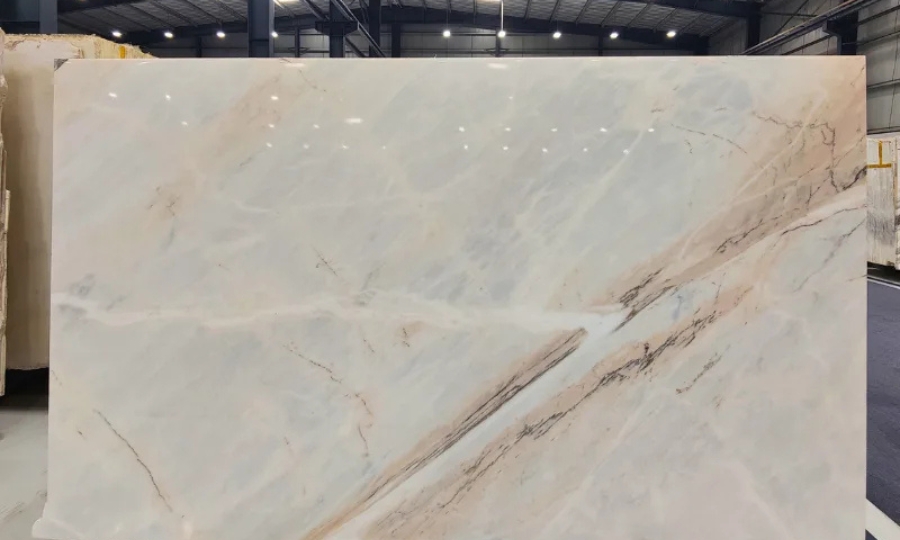
Michelangelo marble is a premium option for a kitchen island and for establishing a spa-like bathroom. Moreover, for minimalist flooring in open-space living and architectural accents, this marble is widely used.
Key Takeaways
- Crystalline texture and natural, elegant veining – key visual attributes of Michelangelo marble.
- Best option for a monolithic kitchen, pairing with dark wood cabinets and matte black hardware.
- Creates a focal point with book-matched feature walls.
- A great choice for minimalist flooring in open-plan interior designs.
- A premium marble option for spa-like ambience with a cleaner and continuous aesthetic.
- A convenient option for marble-topped tables or consoles, elevating the elegant outlook of a modern house.
Michelangelo marble is a premium creamy-white or white Italian marble, known for its durability and delicate golden, grey, or dark veins. Often regarded for a clean surface, the subtle vein patterns mimic brushstrokes. It makes the slabs a polished, luxurious choice for high-end commercial and residential spaces.
Considering the aesthetics and versatility, in this blog, we explore how you can use this marble in modern interiors.
What are the Visual Attributes of Michelangelo’s Marble?
Elegance and refinement – Michelangelo marble in interiors defines a true sense of aesthetics. Here are the visual features that make it a premium choice.
- White Surface
This stone has a clean and bright surface, creating an immediate effect in the interior. Due to the instant effect, experts often opt for it.
- Natural Elegant Veining
The stone slabs offer distinct characteristics of veins. You can find varying, delicate, and thin grey mineral veins throughout the surface of this premium Italian marble.
- Consistent Appearance
Compared to several other stones, Michelangelo slabs show consistency in durability and appearance, with crystalline textures. This feature makes it ideal for residential or commercial wall panels or flooring designs.
These attributes play a pivotal role in empowering the popularity of Michelangelo to shape modern interiors. Premium marble showrooms in India offer this marble, following the demand in modern interiors.
Why do Designers Prefer This Marble for Luxury Interiors?
Since modern interiors are not only about aesthetics, but also durability, designers often opt for Michelangelo marble. It is one of the most popular and widely used stones that effortlessly elevates areas.
Here are the key reasons why designers prefer this marble in premium projects.
- Timeless Elegance
Michelangelo marble offers a timeless elegance to traditional and modern interiors. So, with an essence of refinement, this emerged as a luxury marble for interiors.
- Light Reflection and Spatial Enhancement
Because of its light tone, this marble reflects natural and artificial light effectively. As a result, interiors appear more spacious, brighter, and visually open.
- Versatility Across Design Styles
Whether it’s transitional or contemporary, this premium Italian marble effortlessly matches architectural styles and themes easily. This versatility makes it a popular choice among interior designers.
- Long-Term Durability
The durability of Michelangelo marble empowers its popularity in premium projects. With proper maintenance and sealing, this marble lasts for decades.
What are the Major Uses of Michelangelo Marble in Modern Interiors?
With the spirit of classic grace and elegance, Michelangelo marble in interior shapes the overall aesthetics of residential and commercial buildings. Here are the top 5 uses of Michelangelo marble, enhancing the core beauty of modern interiors.
1. The Monolithic Kitchen Island
A guaranteed refined luxury – Michelangelo marble can make the kitchen island look smart and captivating. The smooth surface of this premium Italian marble is ideal for meal preparation. Moreover, the light colouration of this stone makes the space look brighter.
Moreover, the veining offers natural artistry when this marble is used as a backsplash. Get the best-quality Michelangelo marble from Vardhman Sagar Marbles to make your kitchen look opulent.
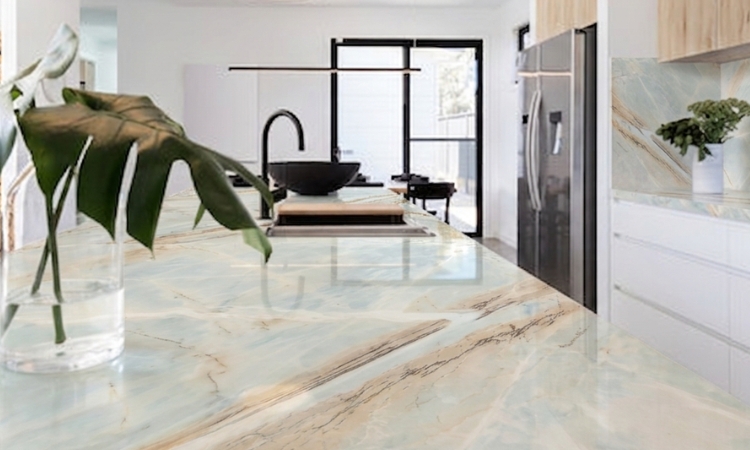
Note: Experts prefer to pair Michelangelo Marble with matte black hardware or dark wood cabinets, since it offers a striking contrast.
2. Symmetrical Book-Matched Feature Walls
The consistent and artistic veining pattern of Michelangelo marble makes it an ideal choice for book-matching on walls. In this regard, two mirror-image Michelangelo slabs are placed side-by-side to establish an art-like focal point in entrance foyers, living rooms, or master bedrooms.
The subtle and fine-grained patterns of the slabs also ensure a seamless transition, essentially ideal for large-scale installations like headboards, TV panels, and fireplace surrounds. Moreover, due to the high-density crystalline structure, this marble reflects light, maximizing the illumination in rooms with a spacious feeling.
3. Grand Minimalist Flooring
The reflective surface and high density of this stone make it a useful and luxurious marble for interiors. The veining patterns provide a seamless visual flow – enhancing natural light and making the open-plan living areas more spacious and feel brighter.
This marble’s veining stands for a “less is more” aesthetic, offering an understated and sophisticated look, complementing the minimalist design of modern interiors. Moreover, the canvas-like flow, offered by this marble, eliminates the jarring visual breaks in modern, open-plan designs.
Note: Use large-format slabs to minimize grout lines, enhancing the seamless and minimalist appearance.
4. Spa-Like Bathroom Retreats
Michelangelo marble transforms traditional bathrooms into luxury ones and creates a spa-like ambiance. Get the best-quality Michelangelo marble from Vardhman Sagar Marbles to integrate vanity tops with undermount sinks.
Instead of small tiles, large slabs reduce grout lines, offering a continuous and cleaner aesthetic in bathrooms. Moreover, the natural veining of this premium Italian marble offers a sense of luxury and tranquility.
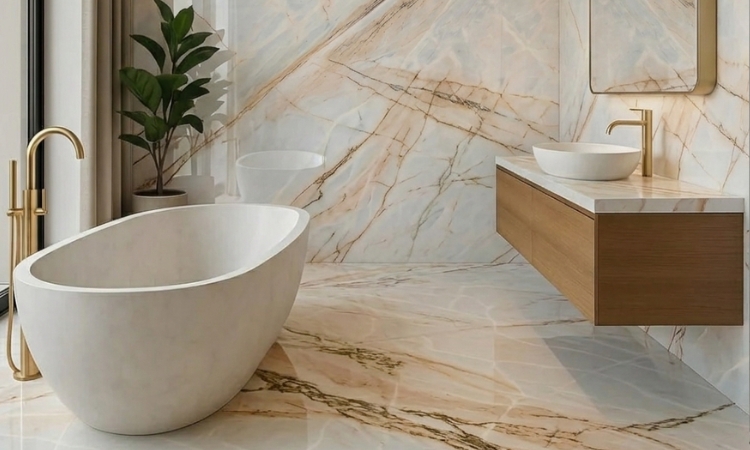
Note: For a unified design, incorporate recessed niches (built-in, in-wall alcoves) with Michelangelo Marble. Ensure proper sealing to avoid staining in high-moisture areas.
5. Architectural and Sculptural Accents
Incorporating this stone with custom furniture or architecture for a more subtle touch. Experts suggest the use of marble for treads to establish a light-reflecting, grand focal point in floating staircases. Moreover, a floor-to-ceiling marble surround works as a sophisticated centerpiece in minimalist fireplaces, without any additional ornamentation. However, marble-topped consoles or tables elevate the luxury of a room with an elegant outlook.
How Do I Know I’m Buying Genuine Italian Michelangelo Marble?
Check the list below to know what your priorities should be while examining the authenticity of Michelangelo Marble.
- Check the presence of slight translucency by holding it against the light. A real one must have a glowing and luminous effect.
- The veining in a Michenangelo marble should be organic and irregular. If the veins look too consistent and mechanical, the marble is most likely fake.
- An authentic Michelangelo Marble must feel cold and smooth, and have natural polish and high gloss without being sticky or waxy.
- Don’t forget to check the slab’s bottom, as the presence of pinholes, resin, or plastic fillers indicates low-quality substitutes.
Sealant and Maintenance Guidelines
Here are some tips regarding marble sealing and maintenance for long-lasting performance.
- Use penetrating sealers and apply them with professional installation methods. Re-seal every 6-12 months for the best performance, especially before the monsoon. Sprinkle water on the surface, and if the water is rapidly absorbed, it’s high time to seal.
- Use a microfiber or dry mop to get rid of debris and dust, while pH-neutral, mild, acidic detergents are ideal for wet cleaning.
- Wipe up coffee, tea, or turmeric-based liquids immediately, since the porous marble absorbs stains quickly.
- During the monsoon, if the marble feels damp or cold, use a dry cloth to wipe it. Against high humidity, the seal works as a buffer.
Contact Vardhman Sagar Marbles for the Best-Quality Michelangelo Marble for an Elegant Interior.
Planning to renovate your house or workstation? Visit our website for more details regarding Michelangelo Marble, and get the best slabs for your modern house.
Frequently Asked Questions (FAQs)
Q1: How do Experts Select Michelangelo Marble in Modern Interiors?
Selecting Michelangelo marble in Modern interiors requires a great deal of consideration, and it is not solely about color. Premium marble showrooms in India prioritize the balance of the vein pattern and consistency, the slab thickness, and surface polish quality. They also check the natural mineral content for the best-quality marble.
Q2: Can Michelangelo Marble be Used with Underfloor Heating Systems?
Yes, Michelangelo marble can be used with underfloor heating systems. This dense, natural stone is a great choice for radiant heating, as it offers high thermal conductivity, allowing heat transfer to the floor surface. It also retains warmth to keep the room cosy and comfortable.
Q3: Why is Michelangelo Marble More Expensive than Standard Carrara Marble?
Michelangelo marble is more expensive than standard Carrara marble due to its superior aesthetic purity and limited extraction. Although both are quarried from the Carrara region in Italy, Michelangelo is a high-end luxury stone, while Carrara is a more accessible and found in abundant variety.
Q4: What Could be the Best Finish for Michelangelo Marble?
Generally, a polished finish is considered the best finish for Michelangelo marble, enhancing the dramatic grey veining, along with a reflective, high-gloss, and sophisticated look suitable for luxurious spaces. Apart from this, for a more understated, matte appearance, leather, honed, and antique finishes are also available.
Q5: Does Michelangelo Marble Stain Easily in an Indian kitchen?
Yes, Michelangelo marble is highly susceptible to staining and etching, if it is not properly maintained. Since it is a porous, natural stone (calcium carbonate), it reacts with acidic substances and colored spices, like spices. Wet cleaning is important to ensure the longevity of the marble, along with the natural polish.