
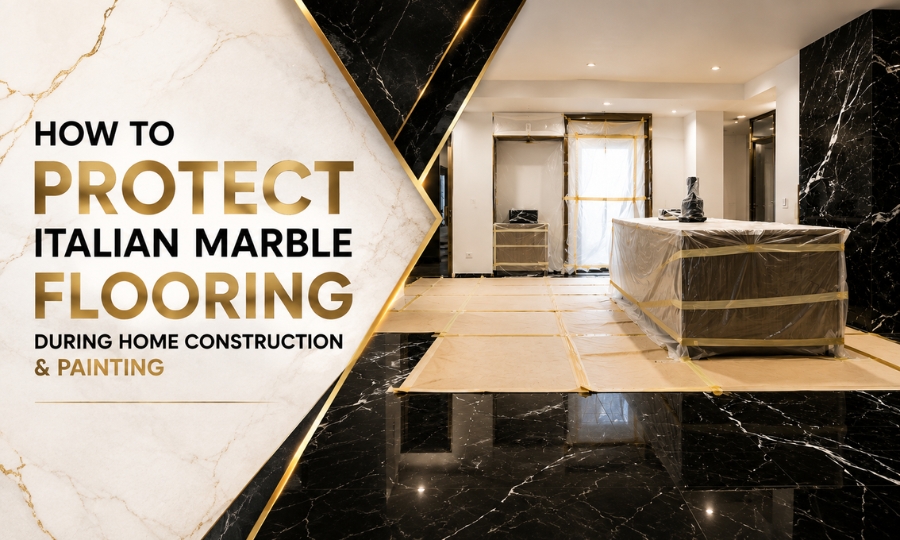
Protecting Italian marble flooring during home construction and painting requires a multi-layer physical barrier system. Apply a breathable cotton fabric base covered by heavy-duty corrugated polypropylene boards sealed with non-staining painter’s tape. Avoid direct plastic contact to prevent condensation, chemical etching from paints, mortar stains, and mechanical abrasion during ongoing site work.
Key Takeaways
- Italian marble consists of delicate calcium carbonate, vulnerable to acidic paints, solvents, and mechanical abrasion.
- Always lay a breathable cloth or fleece layer beneath corrugated plastic sheets to prevent moisture trapping and efflorescence.
- Use non-staining surface protection tapes instead of high-tack adhesive tapes that leave permanent chemical residues.
- Never use acidic chemical cleaners or direct water washing over freshly laid, curing marble floors.
Italian marble often transforms the aesthetics of residential spaces with luxurious and long-lasting appeal.
- Mordor Intelligence suggests that Indian residential accounted for 64.1% of the country’s market share in 2025. The increasing commercial demand is also driven by hospitality renovation and office upgradation projects.
However, ongoing construction and interior painting pose severe risks to its pristine surface. From acidic paint spills to heavy-equipment scratches, marble floors or walls may face irreversible damage, which will eventually impact the overall aesthetics of your house.
So, how can you prevent it? How can you protect the timeless appeal of Italian marble flooring? Let’s find the answers here.
The Science Behind Italian Marble Vulnerability During Construction
So, understanding the geological and chemical properties of Italian marble is essential for preventing costly, irreversible surface damage to Italian marble flooring texture during active home construction.
Chemical Composition and Acid Sensitivity
Composed primarily of calcite, Italian marble reacts instantly when exposed to mild acids present in paints, thinners, and wall putties. The chemical reaction dissolves the surface layer of the marble, leading to the loss of appeal and aesthetics, rough surface patches, and permanent etching.
Porosity, Capillary Action, and Moisture Trapping
The interconnected micro-pores in marble create a capillary network that rapidly draws in liquid spills, uncured mortar, and atmospheric moisture. Non-breathable plastic coverings trap underlying moisture, causing dissolved mineral salts to move outward and appear as cloudy white efflorescence.
Micro-Scratch Dynamics and Mechanical Abrasion
Fine sand grit, concrete dust, and debris left on marble floors often act like abrasive sandpaper, affecting the aesthetics and glow of Italian marble flooring design. As workers often move across the surface with heavy boots or equipment, these abrasive particles grind into the stone, destroying its texture and mirror finish.
Impact Vulnerability and Thermal Expansion Stress
Despite its structural density, an 18mm marble slab is susceptible to severe point-load impacts from dropped boxes or construction or painting tools. Furthermore, thermal expansion caused by direct sunlight or temperature fluctuations creates internal stress that can crack unshielded slabs.
Step-by-Step Protection Strategy for Italian Marble Flooring
To protect Italian marble flooring design and its luxurious surfaces, you must develop an action plan before the painting or construction work begins.
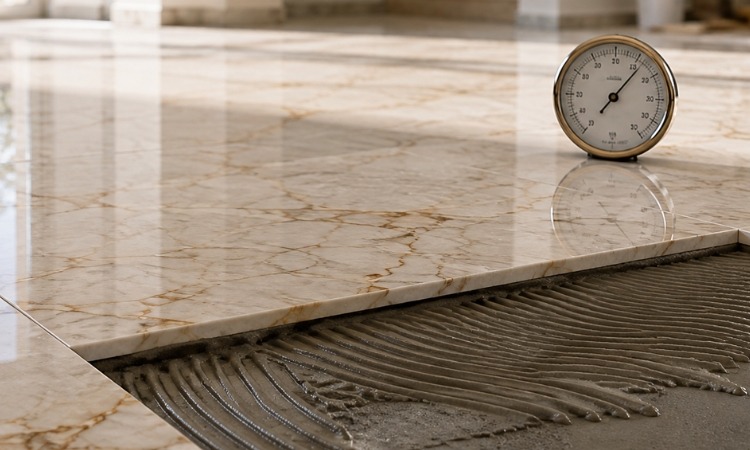
Step 1: Complete Post-Installation Curing
Remember, never cover the floor until the underlying mortar bed has dried and cured completely. Covering wet stone traps moisture, triggering sub-flooring alkali reactions, which affect the Italian marble flooring surface.
Step 2: Lay a Breathable Base Layer
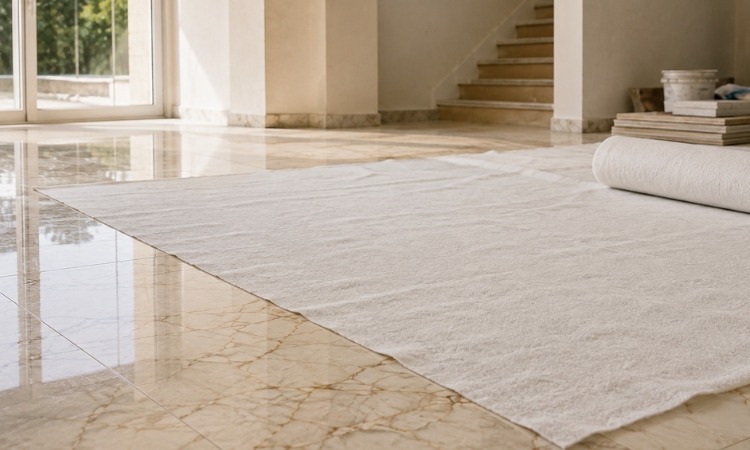
Never apply corrugated sheets or plastic films directly onto raw marble, but use a clean, dry, breathable cotton drop cloth or non-woven geotextile fleece. It prevents trapped condensation and helps the stone stand against friction.
Step 3: Install Heavy-Duty Corrugated Polypropylene (PP) Sheets
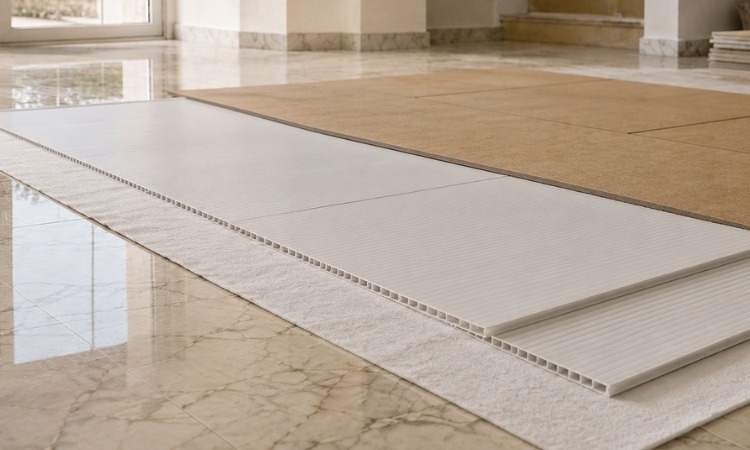
Place 3mm to 5mm thick corrugated PP flute boards (often known as protection sheets) over the fleece layer. For areas handling heavy foot traffic or metal scaffolding, overlay 2mm hardboard (MDF sheets) to absorb structural impacts to protect the authenticity of Italian marble flooring design.
Step 4: Secure Joints with Specially Formulated Tape
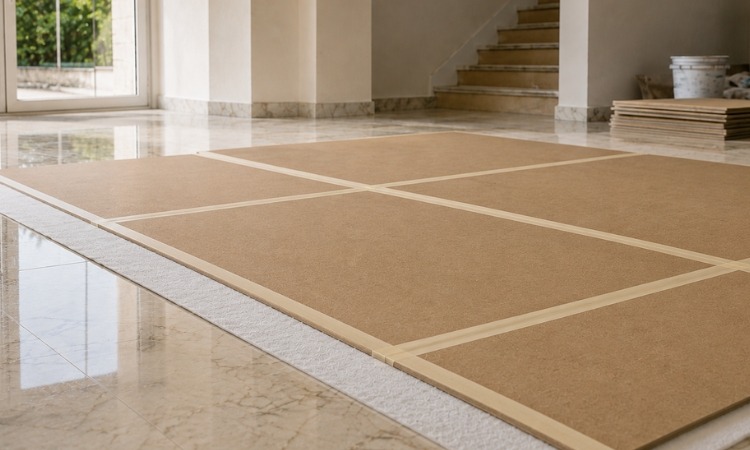
Never apply high-tack duct tape or package tape directly to the marble surface, as adhesives migrate into the stone pores, causing yellow discoloration. Instead, apply non-staining, low-tack masking tape only to the protective board seams to make sure that the tape does not touch the surface of the marble.
Choosing factory-finished, high-density stones for Italian marble flooring reduces initial absorption risks during installation.
- For instance, when designing modern interior spaces, incorporating darker tones like Marquina Black or Golden Galaxy from Vardhman Sagar Marbles provides a striking visual foundation.
These varieties undergo plant processing with a standard 2–5% resin/epoxy filling, reinforcing tensile strength and minimizing natural porosity before site delivery.
Material Comparison: Floor Coverings During Construction
Choosing an improper floor protection material often creates more damage. Inappropriate coverings, such as non-breathable plastic sheets or harsh Plaster of Paris, can trap sub-floor moisture, triggering chemical discoloration, efflorescence, and surface etching that permanently ruins the stone’s factory finish.
Common Floor Covering Materials
The table below evaluates common protection materials for Italian marble flooring textures, used in Indian construction sites.
| Protection Material | Impact Resistance | Moisture Breathability | Risk of Chemical Staining | Reusability |
| Plastic Tarpaulin Sheet | Low | Very Poor (Traps Sweat) | High (Chemical migration) | Low |
| Plaster of Paris (POP) Layer | Moderate | Moderate | High (Alkali damage & scratching) | None (Single Use) |
| Corrugated PP Sheets + Cotton Fleece | High | High | Very Low | Excellent |
| Hardboard (MDF) + Fleece Base | Very High | Moderate | Low | Good |
Table 1: Common Floor Coverings
For homeowners opting for contemporary neutral aesthetics, grey marble options present an outstanding blend of durability and subtle texture.
Premium choices like Armani Grey, William Grey, and California Grey showcase smooth veining that elevates living rooms and hallways. Remember, when sourcing these 18mm plant-processed slabs from Vardhman Sagar Marbles, workers must use protective covers throughout ceiling painting and wall plastering to preserve the pristine stone finish.
Case Study
A luxury home in Bengaluru with 2,800 sq. ft. of Armani Grey Italian marble flooring used a cotton fleece and 4 mm corrugated PP board protection system during 6 weeks of painting and interior work. Despite daily movement of over 20 workers and repeated ladder use, the flooring showed zero scratches, paint stains, or moisture marks after completion. The homeowner avoided an estimated ₹50–₹70 per sq. ft. restoration cost by investing in preventive floor protection.
Essential Dos and Don’ts During Painting & Civil Work
To prevent costly damage to Italian marble flooring during ongoing construction and painting, on-site teams must follow strict physical and chemical protection procedures.
Best Practices (Do’s)
- Lay a breathable base layer: Always place a clean cotton fleece or drop cloth beneath rigid boards to prevent trapped moisture and cushioning friction.
- Inspect and seal seams securely: Connect board joints using non-staining painter’s tape, keeping adhesives off the bare stone while checking weekly for liquid spills.
Critical Mistakes (Don’ts)
- Never apply Plaster of Paris (POP) directly: Avoid plastering directly over bare marble, as wet POP binds into micro-pores and leaves permanent hazy patches upon removal.
- Never stick high-tack tape to marble: Do not apply duct tape or packing tape directly to the stone surface, as the aggressive adhesives penetrate pores and cause yellow discoloration.
Cost Analysis of Protection Systems vs. Restoration
Opting for proper protection ensures significant cost savings compared to post-damage restoration or slab replacement. Preventing mechanical scratches, chemical etching, and moisture entrapment before they happen eliminates the requirement for expensive diamond-grinding treatments, specialized chemical stain removal, or project-delaying slab reinstalls down the line.
The table below highlights various protection items and estimated costs with preventive values.
| Item / Activity | Estimated Cost (INR per Sq. Ft.) | Preventive Value / Impact |
| Cotton Fleece & Corrugated PP Board Cover | ₹12 – ₹18 | Prevents all major scratches, stains, and impact chips. |
| Diamond Polishing & Stain Removal | ₹45 – ₹80 | Required if paint or acid etches into the stone surface. |
| Slab Replacement (Imported Italian Marble) | ₹250 – ₹600+ | Required if heavy impacts crack the 18mm stone slab. |
Table 2: Cost Comparison: Floor Protection vs. Surface Restoration
Wrapping Up
Protecting your luxury stone surfaces during home construction and painting is a critical step in preserving your property’s value and aesthetic appeal. By using appropriate masking tapes and avoiding harsh chemical exposure, your stone flooring maintains its factory-grade sheen and structural integrity for generations.
Ready to Elevate Your Home with Premium-Quality Natural Stone?
Explore the finest imported marble collection at Vardhman Sagar Marbles. Visit our Kishangarh showroom or contact us for expert guidance to select premium, factory-finished slabs for your dream architectural project today!
Frequently Asked Questions
1. How Long After Laying Italian Marble Can I Cover It With Protective Sheets?
Allow at least 7 to 10 days for the under-bed mortar to dry fully before laying protective sheets. Covering wet stone too early traps moisture beneath the surface, leading to dark damp patches and alkali efflorescence.
2. What Is the Safest Way To Remove Acrylic Paint Drips If They Land on Bare Marble?
Gently blot the wet paint immediately using a soft microfibre cloth dampened with warm water and neutral pH liquid soap. Never scrape dry paint with metal blades or use acidic solvents like thinner, as they etch the calcium structure.
3. How Do Regional Humidity Variations In South India Affect Floor Covering Choices During Construction?
In humid coastal regions like Chennai or Mumbai, moisture takes longer to evaporate from mortar beds, requiring extended curing periods before covering floors. Always use highly breathable cotton fleece underlayments to prevent fungal growth and condensation entrapment underneath protective boards.
4. Can Extreme Temperature Fluctuations in North India Cause Protected Marble to Warp During Construction?
Yes, rapid thermal cycles in northern regions can cause differential thermal expansion between the stone surface and the sub-floor bed. Maintaining adequate expansion joints along room perimeters and using breathable floor protection layers mitigates thermal stress buildup under direct sunlight.
5. Is Factory-Processed Italian Marble More Resistant to Construction Stains Than Site-Polished Marble?
Yes, slabs processed in modern manufacturing plants undergo automated vacuum resin treatments that seal micro-fissures and maintain a precise 18mm thickness. The structural treatment significantly reduces surface porosity, providing superior initial resistance against accidental liquid spills compared to unsealed site-polished stone.