
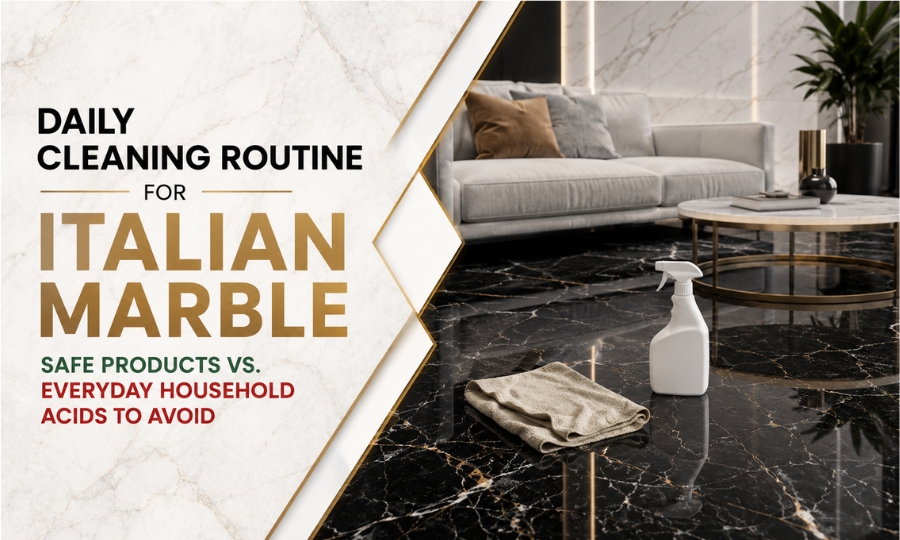
Italian marble requires specialized maintenance to preserve its crystalline shine and structural integrity. Cleaning calcite-rich stones demands pH-neutral formulations rather than common kitchen acids like vinegar or lemon. Establishing a disciplined dust-mopping and damp-wiping routine with gentle solutions prevents dullness, micro-etching, and surface discoloration across luxury residential installations.
Key Takeaways
- Calcite marble reacts with household acids like lemon juice and vinegar, causing immediate surface dullness.
- Daily maintenance requires pH-neutral solutions, microfiber mops, and soft water wiping.
- Avoiding abrasive scrubbers and prompt spill management preserve floor polish, ensuring long-term aesthetic beauty, structural durability, and value for luxury Indian homes.
Italian marble is known for creating unparalleled elegance and timeless luxury in modern Indian residences, transforming grand living rooms, focal feature walls, and bespoke dining spaces into stunning statements of opulence and refined taste.
However, maintaining its pristine surface and aesthetics requires a clear and concise understanding of stone chemistry, as everyday household items often cause irreversible surface etching. So, here in this guide, we outline safe daily care practices, chemical pitfalls, and expert strategies to keep your premium marble floors flawless for generations.
The Chemical Vulnerability of Italian Marble
Italian marble is primarily composed of recrystallized calcite.
- According to USGS and the CSIR News, calcite is highly vulnerable to acidic substances.
- While calcite empowers the brightness, polish, and luxurious appearance of Italian marble, it is also chemically reactive. Even weak acids readily dissolve calcium carbonate, causing the polished surface to lose its gloss through a process known as acid etching.
When an acidic substance comes into contact with calcium carbonate, it dissolves the marble’s outer surface layer and removes a microscopic layer of the stone, damaging its polished finish.
Follow some Italian marble cleaning tips for regular or weekly cleaning and keep the surface clean and shiny.
Etching
The chemical reaction creates surface etching, a dull, rough patch that alters the marble’s smooth, mirror-like shine. Even common household acids, such as lemon juice (pH: 2.0-2.6) and Vinegar (pH: 2.4-3.0), can trigger this damage within seconds. Since these acids are highly reactive with calcium carbonate, even brief exposure can leave permanent marks.
- As the surface layer breaks due to the reaction, the marble loses its natural gloss, and the etching cannot be reversed through regular cleaning. So, restoring the finish typically requires professional polishing.
Common Household Acids to Keep Away From Italian Marble
Here are some common household acids that must be kept away from Italian marble.
- Lemon Juice and Vinegar: Frequently considered as eco-friendly household cleaners, these acids etch marble easily.
- Toilet and Bathroom Cleaners: Hydrochloric acid-based formulations destroy the stone’s finish instantly.
- Tomato Sauce and Curd: Lactic acid and acid content in food spills require immediate blotting.
- Commercial Multipurpose Cleaners: Many off-the-shelf cleaners contain acidic pH balances designed for ceramic tiles. Homeowners seeking guidance on how to clean Italian marble floors must avoid these aggressive multi-surface cleaners.
Safe Daily Cleaning Routine for Italian Marble
To keep your floor long-lasting, driven by the natural appeal, follow a structured daily care routine using safe techniques and appropriate products.
Step 1: Dry Dust Mopping
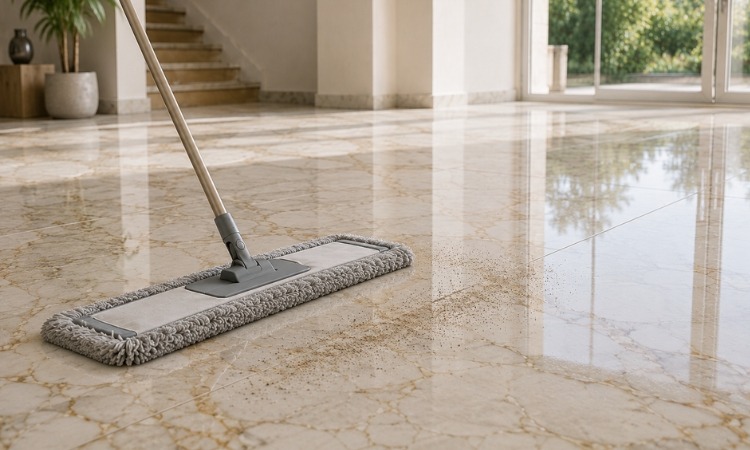
Grit, sand, and airborne dust act as abrasives under foot traffic. Clean the floor with a clean, dry microfiber mop to remove surface particulates without scratching. Avoid broom bristles, which can cause micro-abrasions over time.
Step 2: Wet Wiping with a Neutral Solution
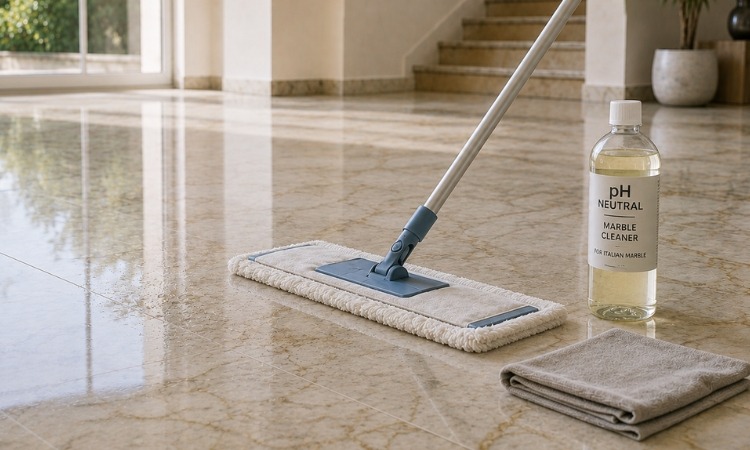
When wet cleaning, always opt for a specialized pH-neutral Italian marble cleaning liquid diluted in soft water. Avoid hard tap water where possible, as dissolved calcium and magnesium ions leave unsightly white mineral deposits. Use a damp microfiber mop and dry the surface immediately with a lint-free towel.
Step 3: Immediate Spill Management
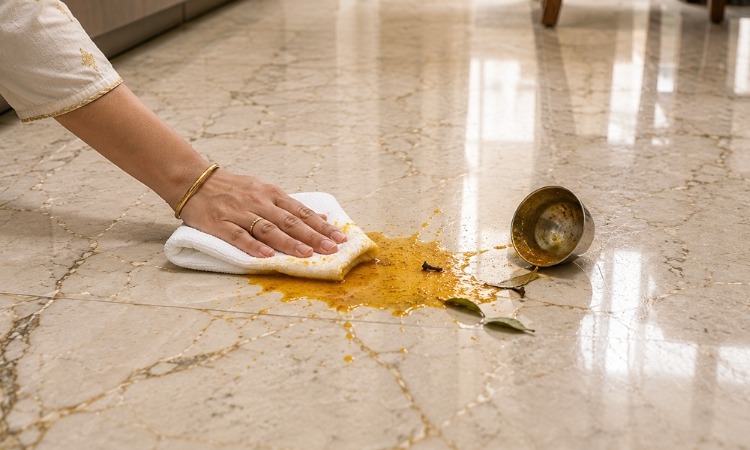
In Indian kitchens and dining areas, spills involving oil, ghee, tea, or haldi are common. Don’t forget to blot spills immediately using an absorbent cloth. Following structured Italian marble cleaning tips ensures long-term stain prevention across living areas.
While daily maintenance is vital, the longevity of your flooring also depends on stone selection and initial processing.
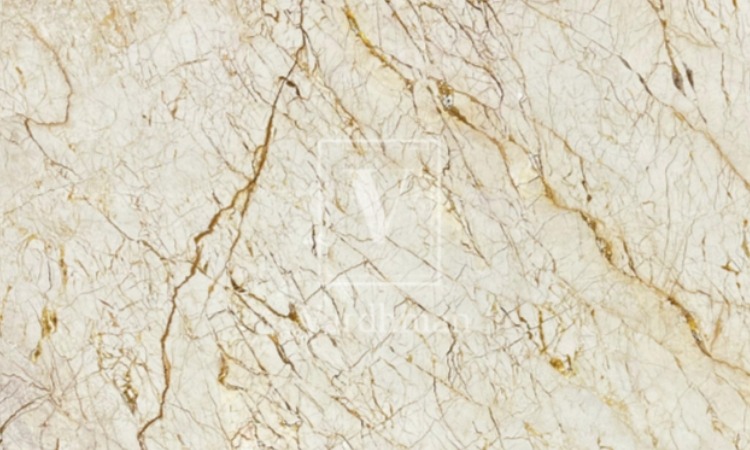
- At Vardhman Sagar Marbles, slabs of Spider Grey Italian Marble, Sofita Beige Italian Marble, and Golden Galaxy Italian Marble are treated with advanced epoxy resin sealing techniques. Selecting dense, well-sealed slabs from a trusted supplier significantly reduces stain absorption and simplifies daily upkeep.
Comparative Analysis: Safe vs. Acidic Household Cleaners
The following table identifies common household agents, their pH levels, and their impact on natural calcite stone.
| Household Cleaner / Agent | pH Level | Chemical Compound | Impact on Italian Marble | Recommended Action |
| Specialized Neutral Cleaner | 7.0 – 7.5 | Non-ionic surfactants | Completely safe; preserves polish | Use daily for routine wiping |
| Distilled Water | 7.0 | H2O | Completely safe | Ideal for damp mopping |
| Lemon Juice / Citric Cleaners | 2.0 – 2.6 | Citric Acid | Severe surface etching; loss of shine | Strictly avoid |
| White Vinegar Solutions | 2.4 – 3.0 | Acetic Acid | Dissolves calcite; leaves chalky spots | Strictly avoid |
| Tile & Bathroom Acid Cleaner | 1.0 – 2.0 | Hydrochloric Acid | Instant deep corrosion & pitting | Strictly avoid |
| Glass / Ammonia Cleaners | 10.5 – 11.5 | Ammonia | Strips protective sealants | Avoid regular usage |
Table 1: Common Household Cleaning Agents
Choosing an exclusive Italian marble cleaning liquid over household acids ensures the aesthetics and appeal of delicate stone like Red Breccia Italian Marble and Simpolo Grey Italian Marble.
Recommended Maintenance Protocols: Daily vs. Periodic Care
Maintaining high-end stone requires distinguishing between routine maintenance and periodic restoration, as daily surface wiping protects against ambient wear, while professional deep honing and re-sealer services protect the internal mineral structure from long-term degradation.
The table below offers a set of maintenance protocols essential to keep the marble surface pristine with its natural beauty.
| Maintenance Level | Frequency | Recommended Tools & Products | Key Objective |
| Daily Maintenance | Every 24 Hours | Microfiber dry mop, pH-neutral Italian marble cleaning liquid | Remove loose dust, prevent scratch accumulation |
| Weekly Deep Cleaning | 1–2 Times/Week | Soft microfiber cloth, damp mop with soft water, neutral solution | Neutralize surface grime, restore ambient sheen |
| Quarterly Buffing | Every 3 Months | Wool felt buffer pad, neutral stone polish | Maintain optical reflection, smooth micro-wear |
| Annual Inspection | Every 12–18 Months | Professional penetrating sealer application | Seal capillary pores against deep liquid penetration |
Table 2: Maintenance Protocols
Knowing how to clean Italian marble floor areas ensures that natural variants like Brescia Aurora Italian Marble maintain their warm lustre for years. Using gentle Italian marble cleaning liquids maintains the shine without stripping internal sealers.
Case Study
A South Mumbai apartment with 1,200 sq. ft. of Black Marquina Italian marble flooring developed dull patches within 6 months, since a lemon-scented floor cleaner and hard water were used daily. Professionals restored the surface through diamond-pad honing (400–3000 grit), followed by cleaning with a pH-neutral marble cleaner and sealing with a penetrating sealer. The homeowner started to use microfiber dust and soft-water cleaning. As a result, the marble’s mirror finish was restored and remained flawless for the next two years, avoiding costly repeat polishing.
Every natural stone variety, from Rosalia Beige to Black Rose, has unique density and porosity characteristics. Vardhman Sagar Marbles offers tailored guidance on stone selection, initial impregnation sealing, and long-term care protocols. Homeowners seeking definitive answers on how to clean Italian marble floor layouts receive comprehensive maintenance guidelines alongside their purchase. Sourcing your stone from an established provider ensures expert support throughout the lifespan of your flooring.
Wrapping Up
Preserving the authenticity of luxury stones requires a balance of chemistry and consistent daily care. By avoiding reactive household chemicals and adhering to pH-neutral maintenance, homeowners can protect their investment. Treat your stone with care, follow tailored routines, and enjoy timeless elegance in every room of your residence.
Ready To Elevate Your Living Spaces With Authentic, World-Class Imported Stone?
Discover an exquisite collection of Italian slabs at Vardhman Sagar Marbles. Contact our stone experts or visit our Kishangarh showroom to explore premium selections that redefine architectural luxury and timeless residential sophistication!
Frequently Asked Questions (FAQs)
1. How Do I Remove Hard Water Mineral Deposits From Italian Marble Without Using Acidic Descalers?
In regions like Delhi NCR with high water hardness, avoid acidic descalers entirely as they strip natural calcite shine. Instead, use a specialized pH-neutral stone cleaner diluted in distilled or RO water, gently buffing with a soft white nylon pad before drying immediately.
2. What is the Safest Way to Clean Italian Marble Floors During Humid Monsoons in Coastal Cities Like Mumbai or Chennai?
During humid monsoons in coastal cities, avoid wet mopping with excessive water to prevent moisture entrapment and efflorescence underneath tiles. Use dry microfiber dust mopping and a fast-evaporating, pH-neutral stone cleaner mixed with warm RO water when damp mopping is required.
3. Can I Use Baking Soda Paste To Remove Organic Stains Like Tea Or Coffee From Italian Marble?
Baking soda or Sodium Bicarbonate is mildly alkaline (pH: 8-9), but it can act as an abrasive if scrubbed across polished surfaces. For organic stains like tea or coffee, apply a poultice made of food-grade 3% hydrogen peroxide mixed with diatomaceous earth, cover with plastic wrap for 24 hours, and wipe clean without scrubbing.
4. How Can I Test If a Commercial Floor Cleaner is Safe Before Applying it Across My Entire Marble Floor?
Perform a patch test in an inconspicuous area, such as behind a sofa or inside a closet. Apply a few drops of the cleaner, wait for 10–15 minutes, wipe it off with a damp cloth, and inspect the spot under direct light for any loss of gloss or dullness before full application.
5. Why Does My White Italian Marble Develop Yellowish Patches Over Time, And Can Standard Cleaning Fix It?
Yellowing in white marble often results from the oxidation of internal iron traces (pyrite) due to trapped subsurface moisture or yellowing of low-quality topical waxes. Standard surface washing cannot fix iron oxidation, but it requires deep professional polishing or re-honing by stone restoration experts.